Concrete Driveway Building
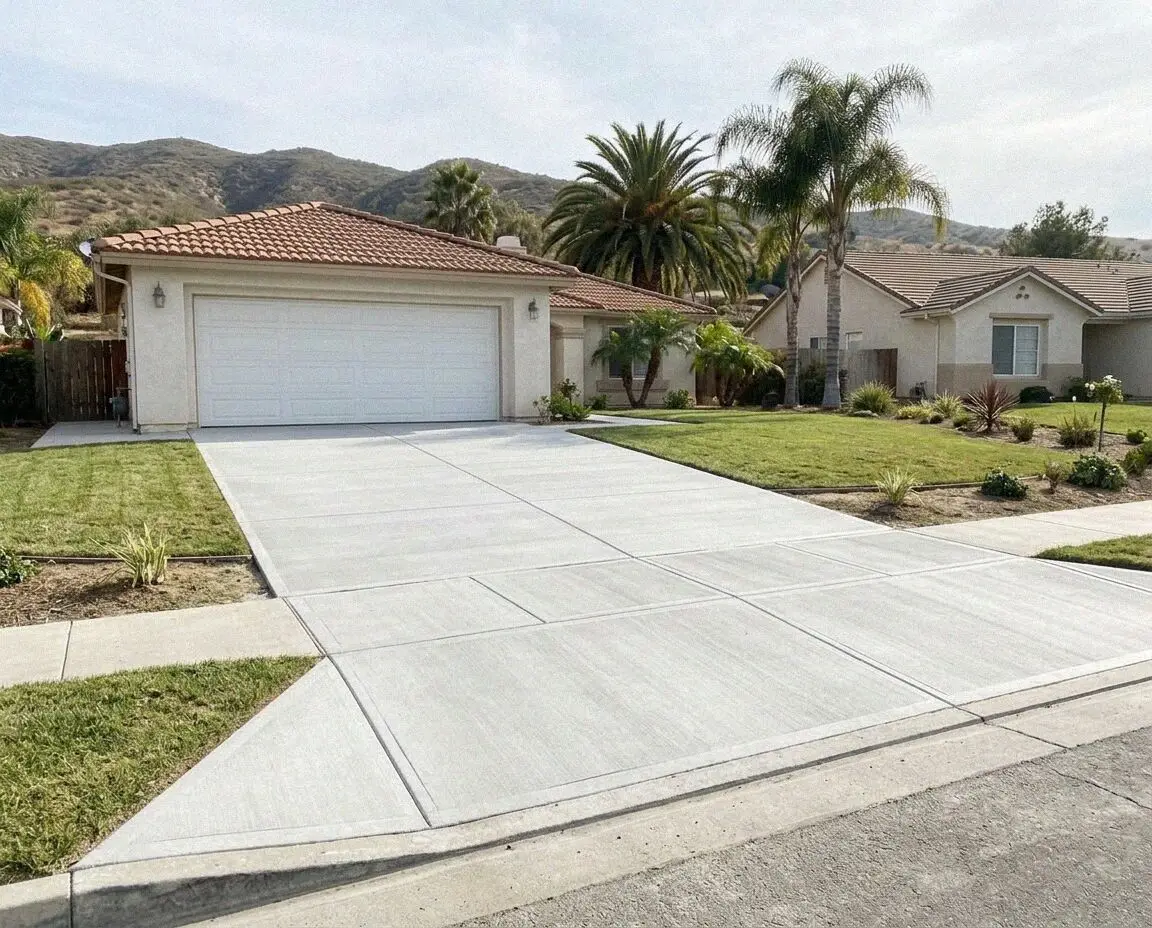
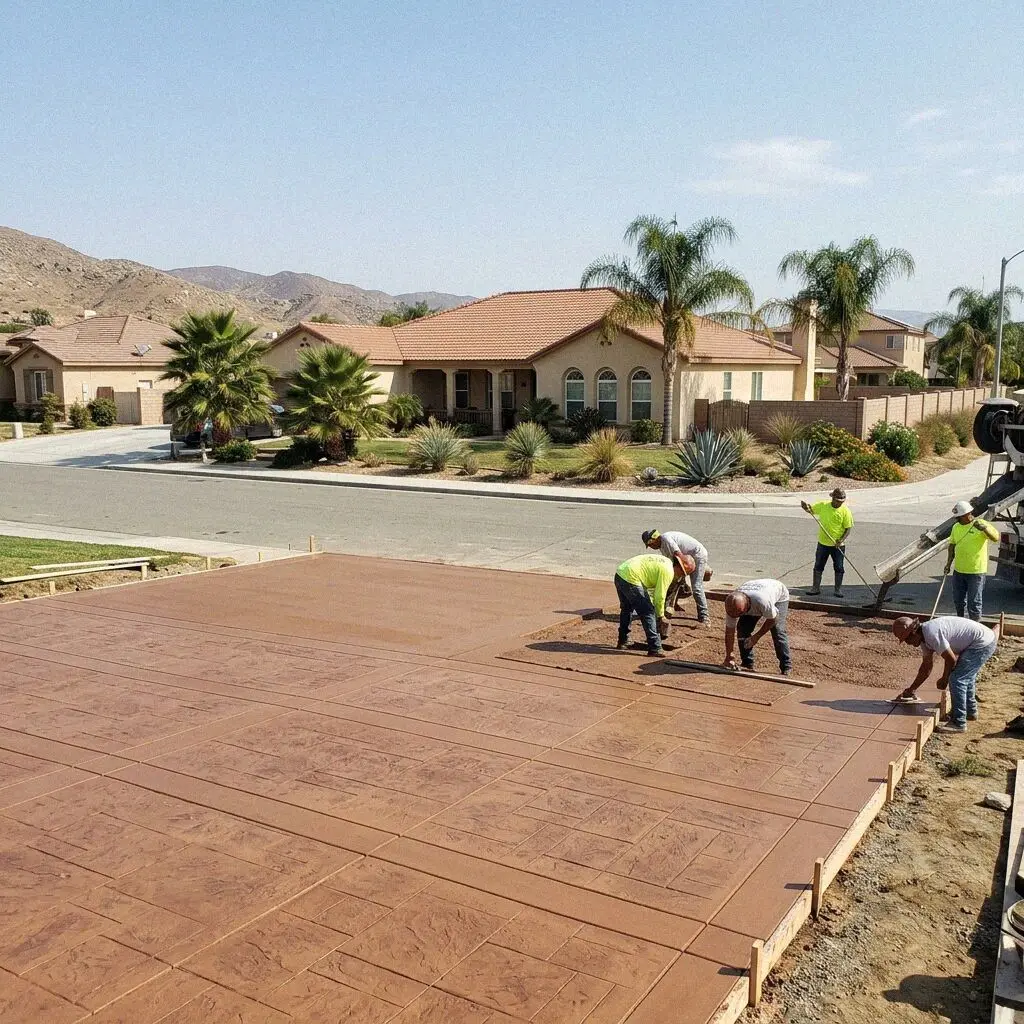
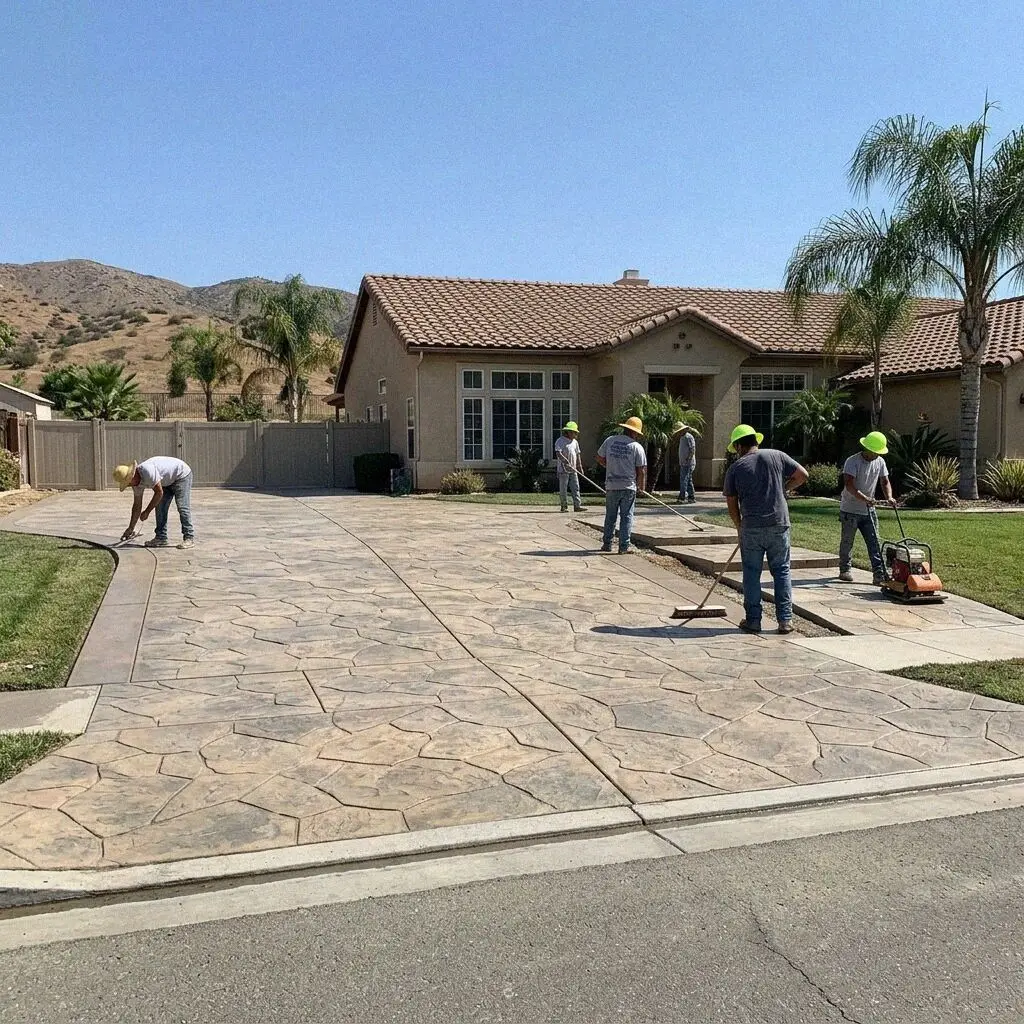
A new drive built for the run it has to cover, dug to firm ground, edges formed where no curb holds them and thickened where trailers turn.

Driveways, patios, foundations, retaining walls and decorative concrete for homes and businesses throughout Jurupa Valley.


 5.0 Stars Rated by our customers · Google, Facebook and the BBB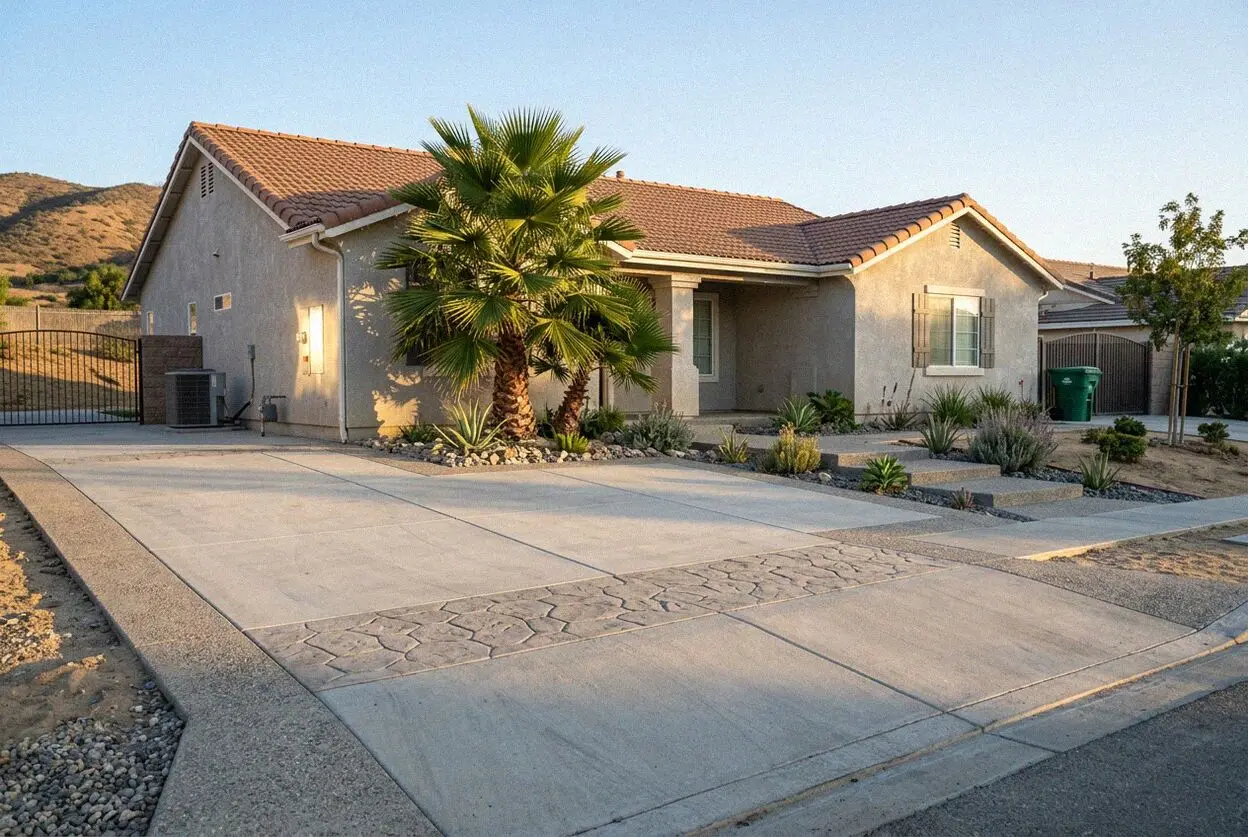
Local concrete contractor serving Jurupa Valley, CA. We build and replace concrete driveways, patios, sidewalks, foundations, retaining walls and pool decks. Get a free on-site estimate with an itemized quote for labor, materials, excavation, base preparation and finishing.
A new drive built for the run it has to cover, dug to firm ground, edges formed where no curb holds them and thickened where trailers turn.
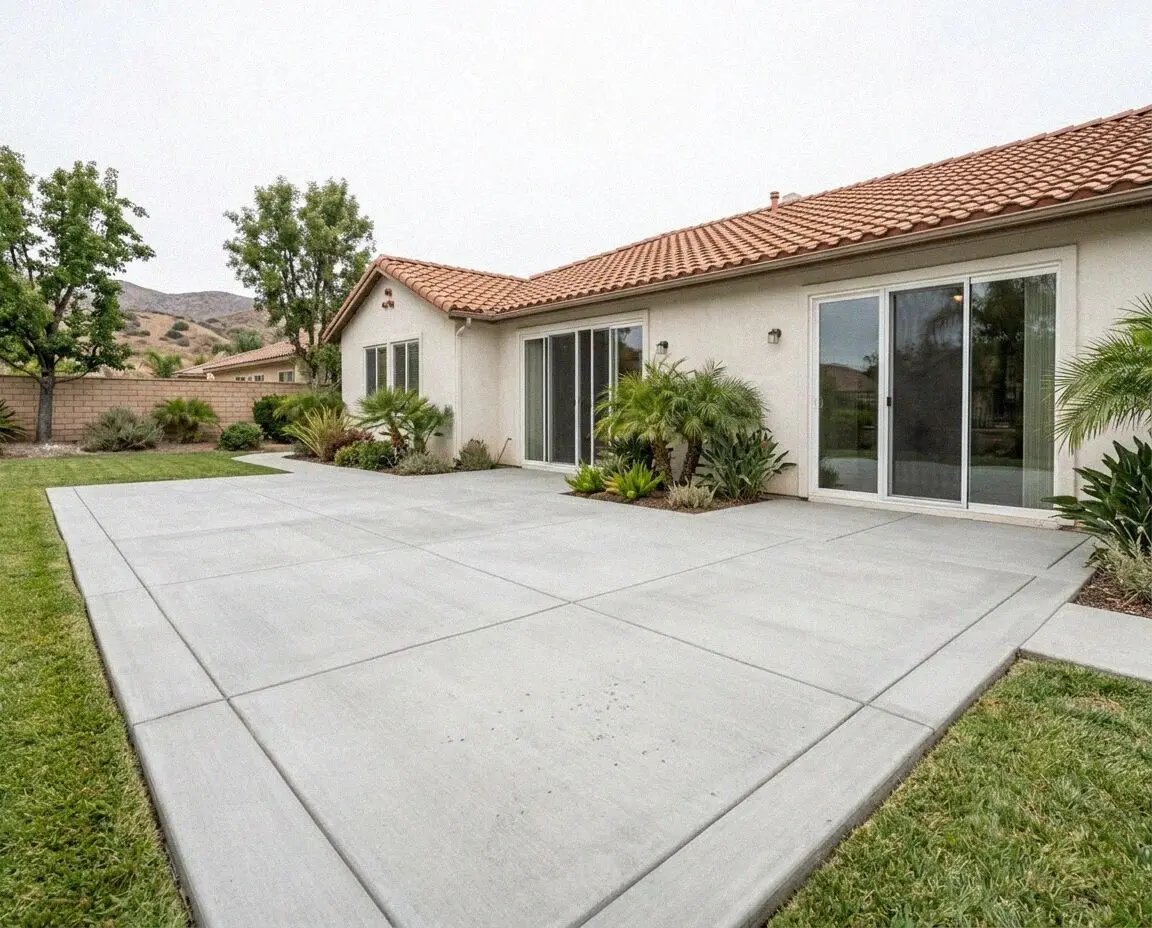
Patio cracked across, undercut or too hot to sit on? We pour 4 inches on compacted base, cut on a grid, in a color that stays walkable.
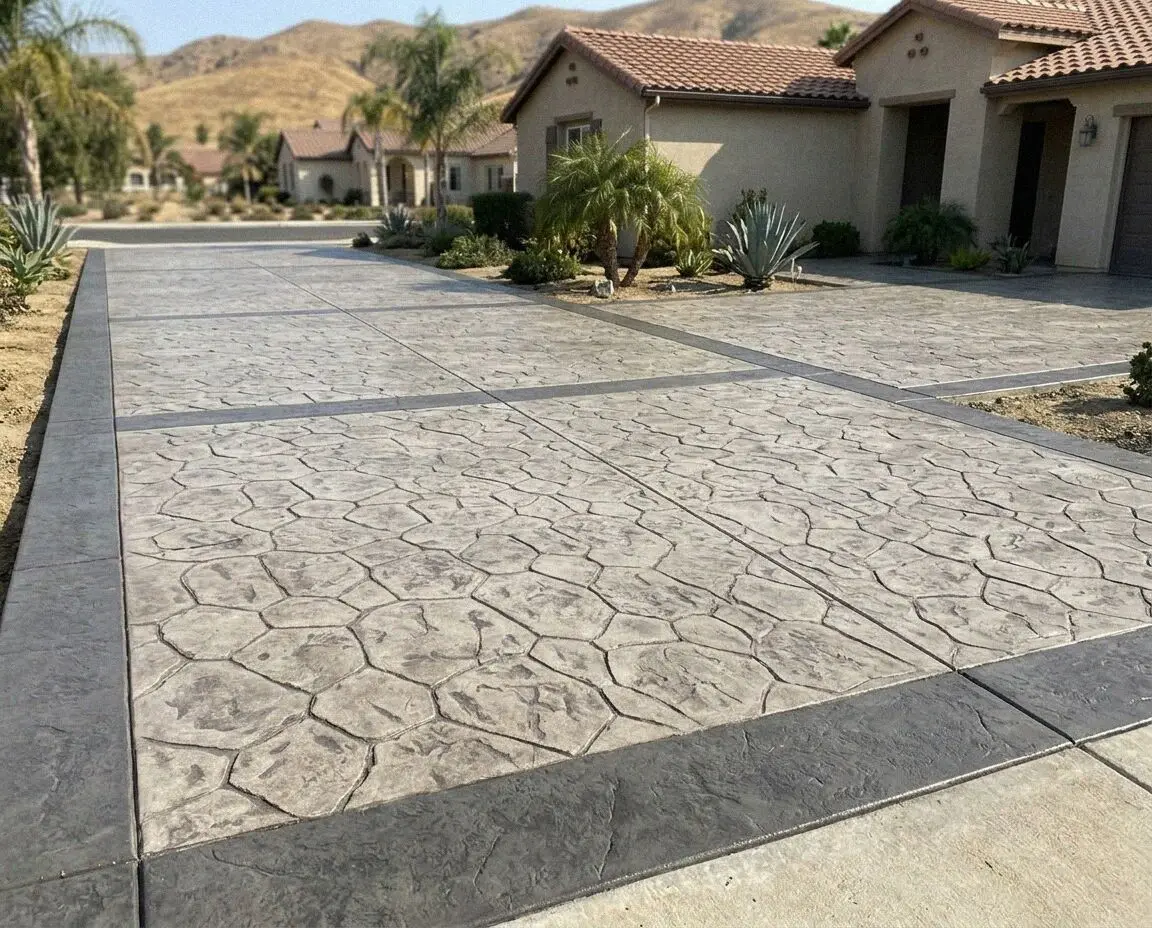
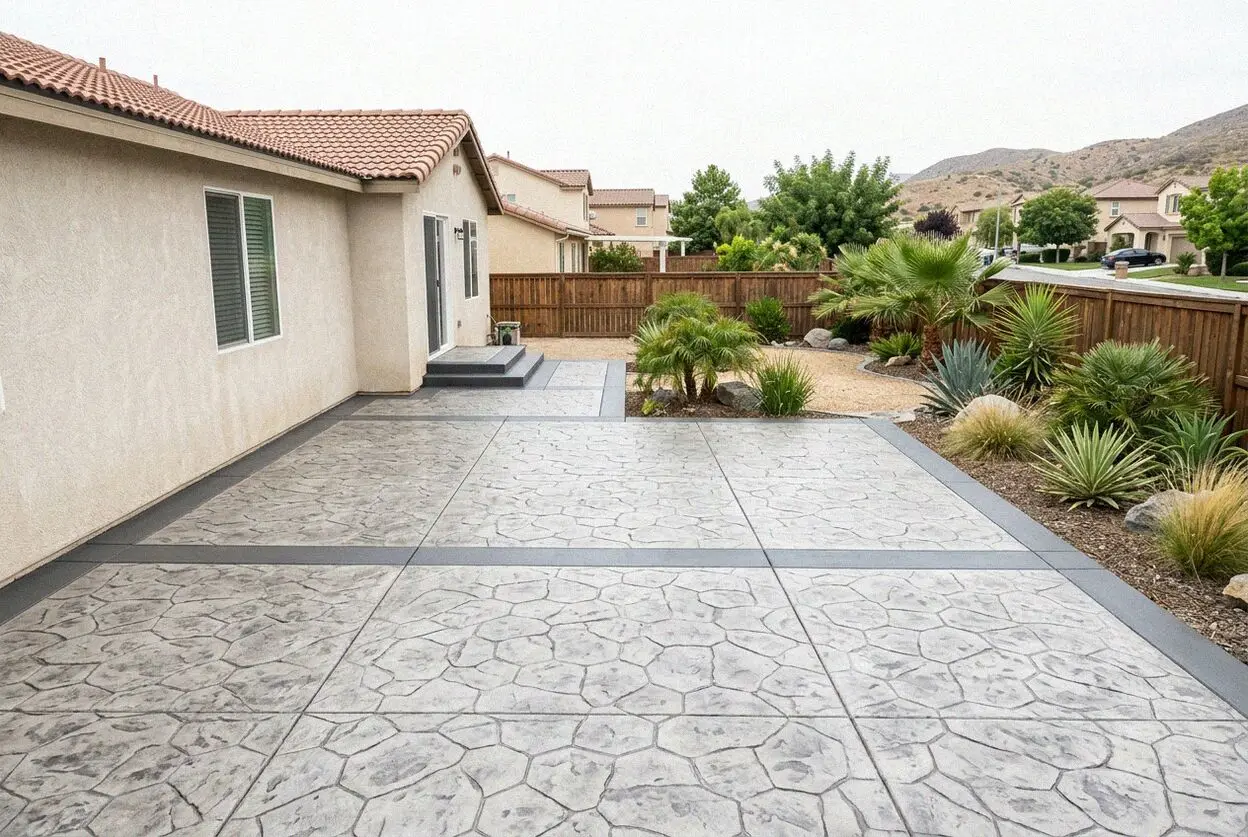
Patterns pressed into the slab at the pour, with the joint grid drawn to the area first, so a wide patio reads as one surface, not a grid.
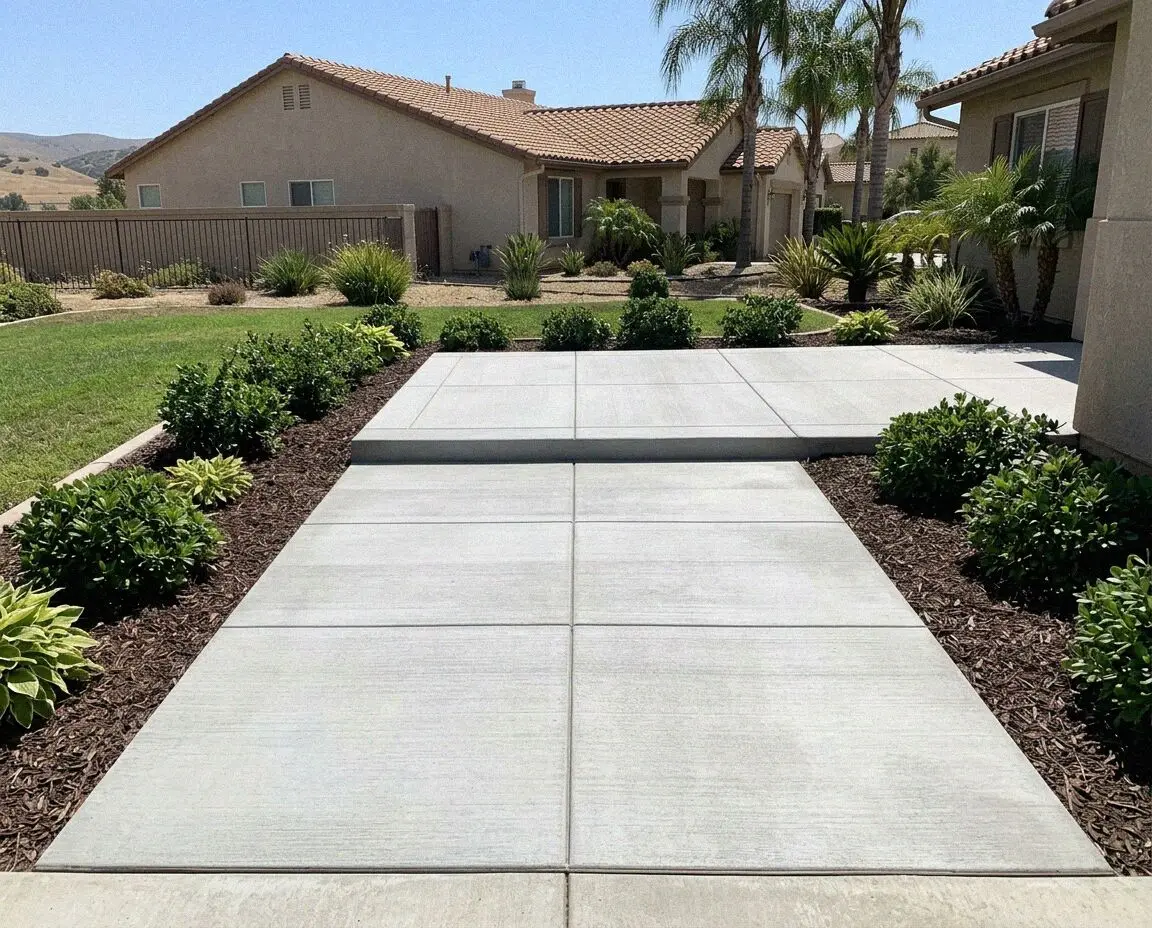
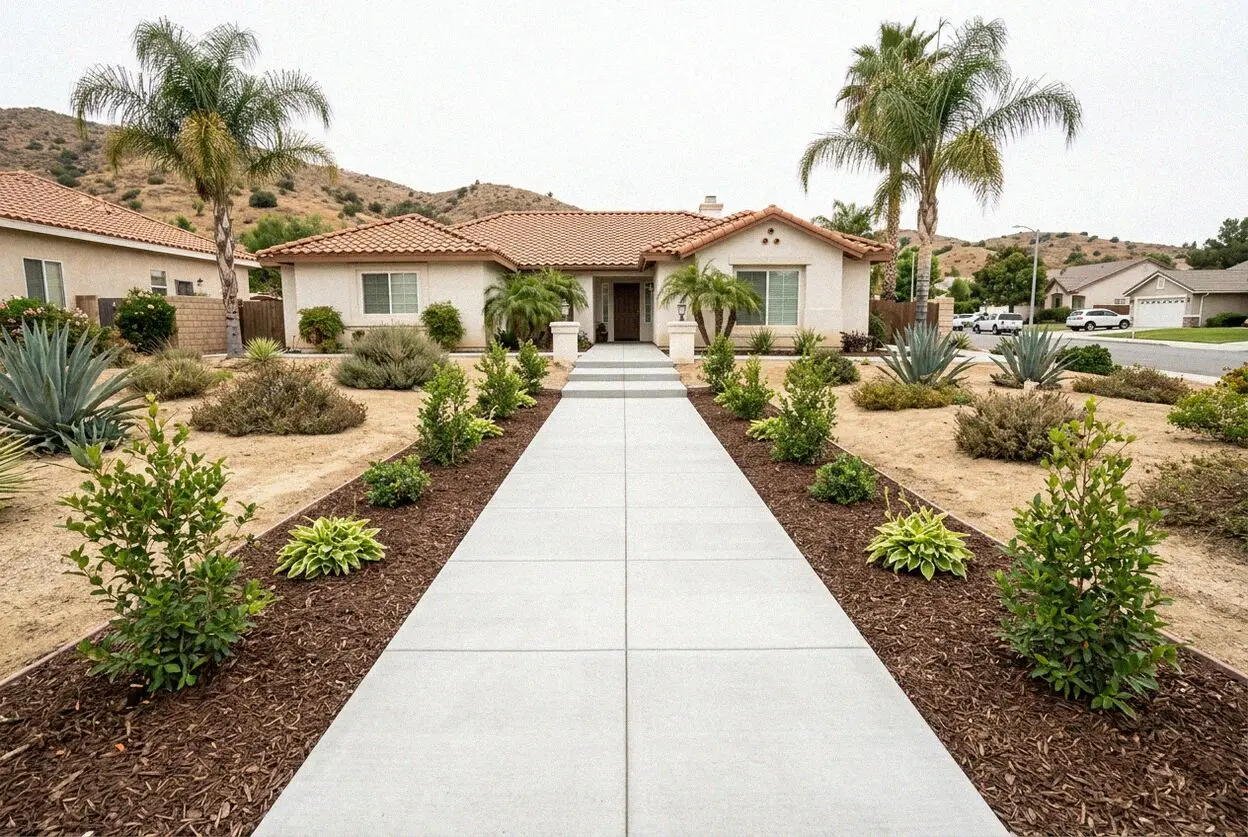
Slab lifted at the tree, or no walk on your side of the street? We pour 4 inches over compacted base and take the permit out for you.
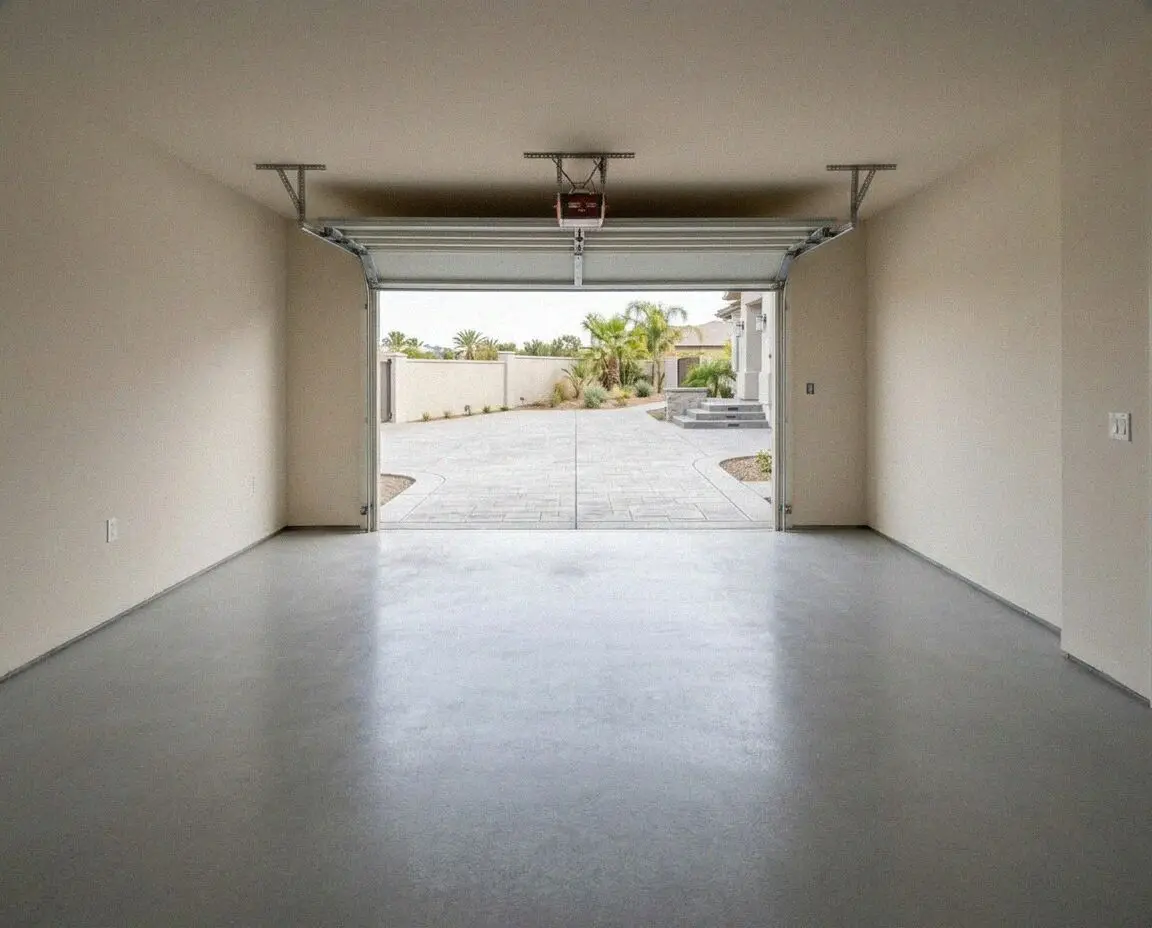
Thin, sunk or cracked shop and garage floors, repoured 4 to 6 inches deep on sheeted and compacted base, with joints sawn on a 12-foot grid.
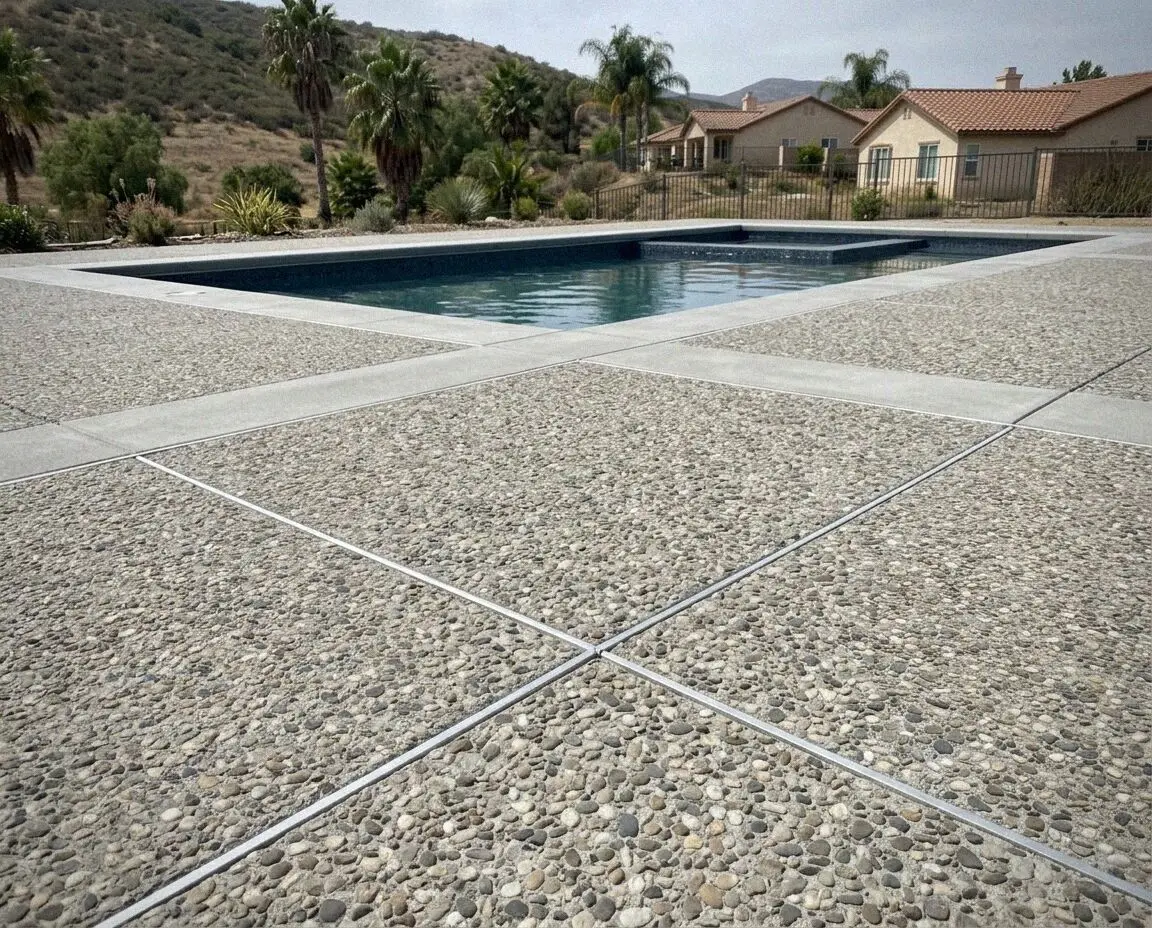
Integral color, acid stain, washed river aggregate and saw-cut scoring, picked against the stucco and roof tile here and sealed for our sun.
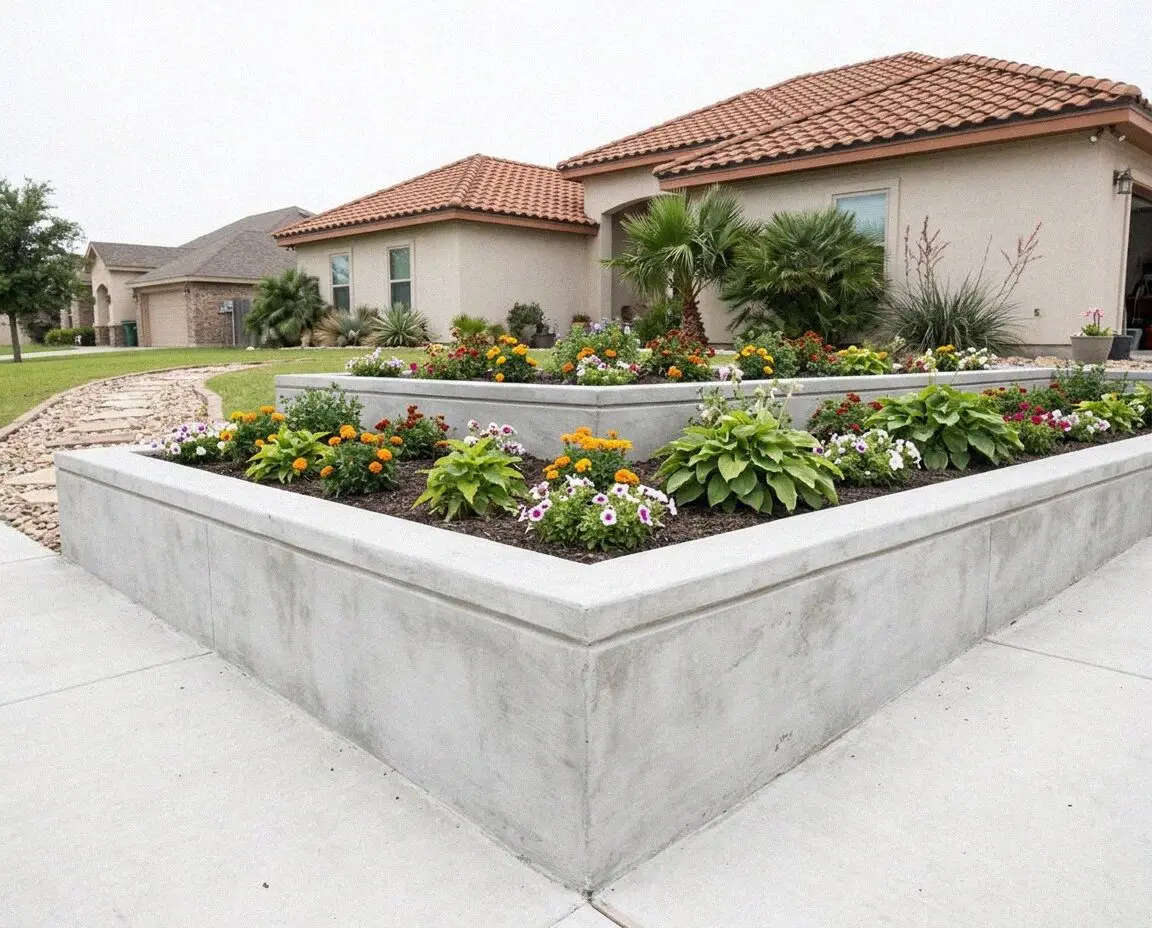
Bank on the move, or a pad edge breaking away? Poured and block walls, footed below the loose ground, with rock and a pipe behind every stem.
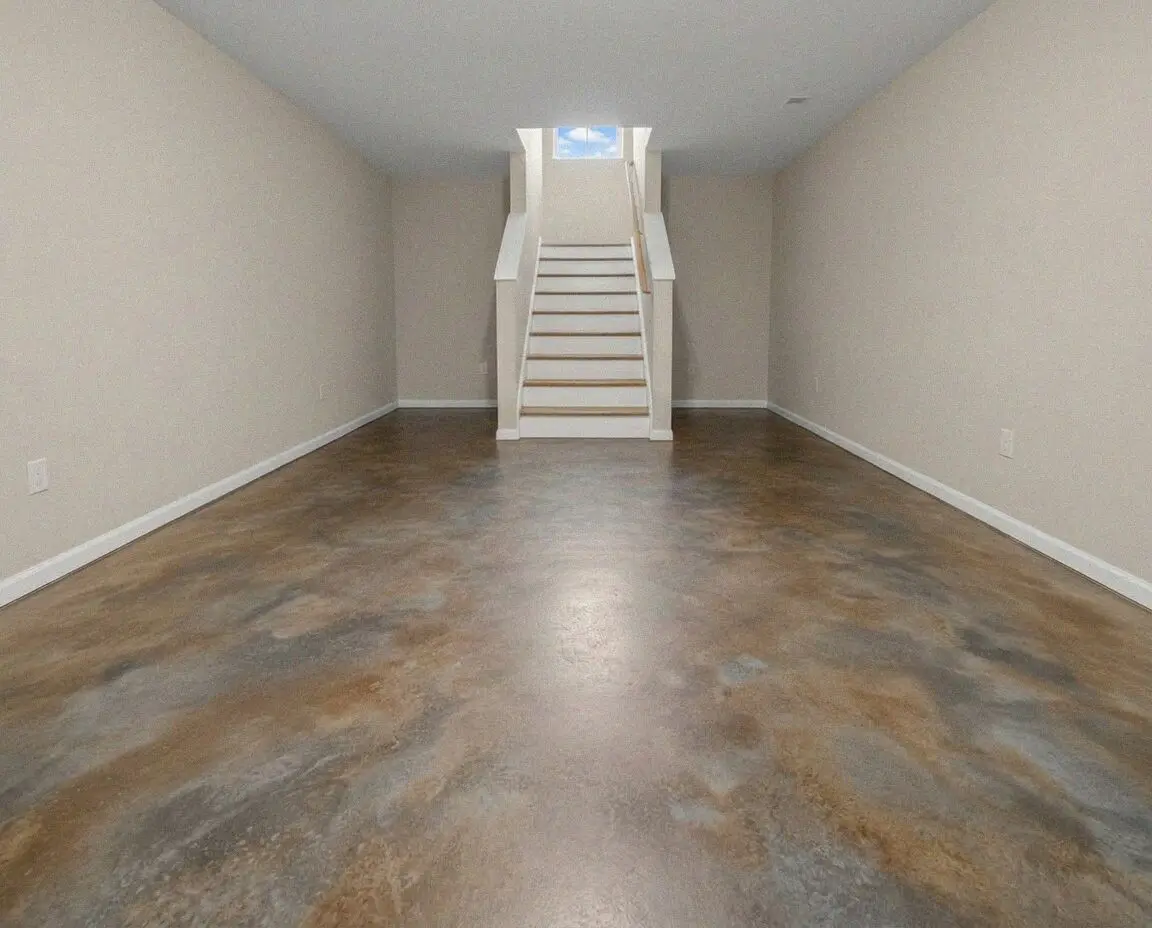
Barn, shop or ADU being finished? Interior slabs cast on a sealed 15-mil retarder and troweled flat enough to lay plank straight onto.
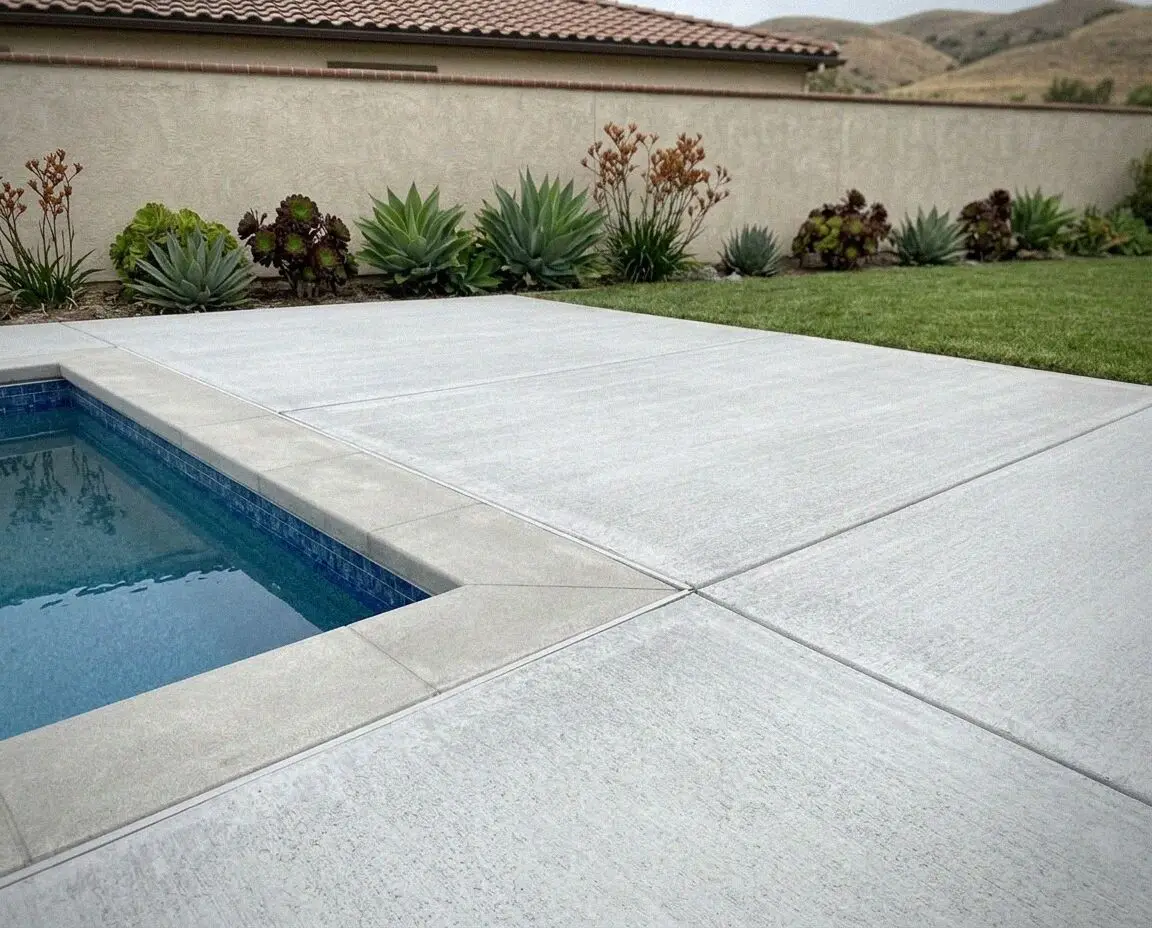
Deck too hot to cross in August? A pale, textured slab on compacted base, jointed half an inch off the coping and falling to the garden.
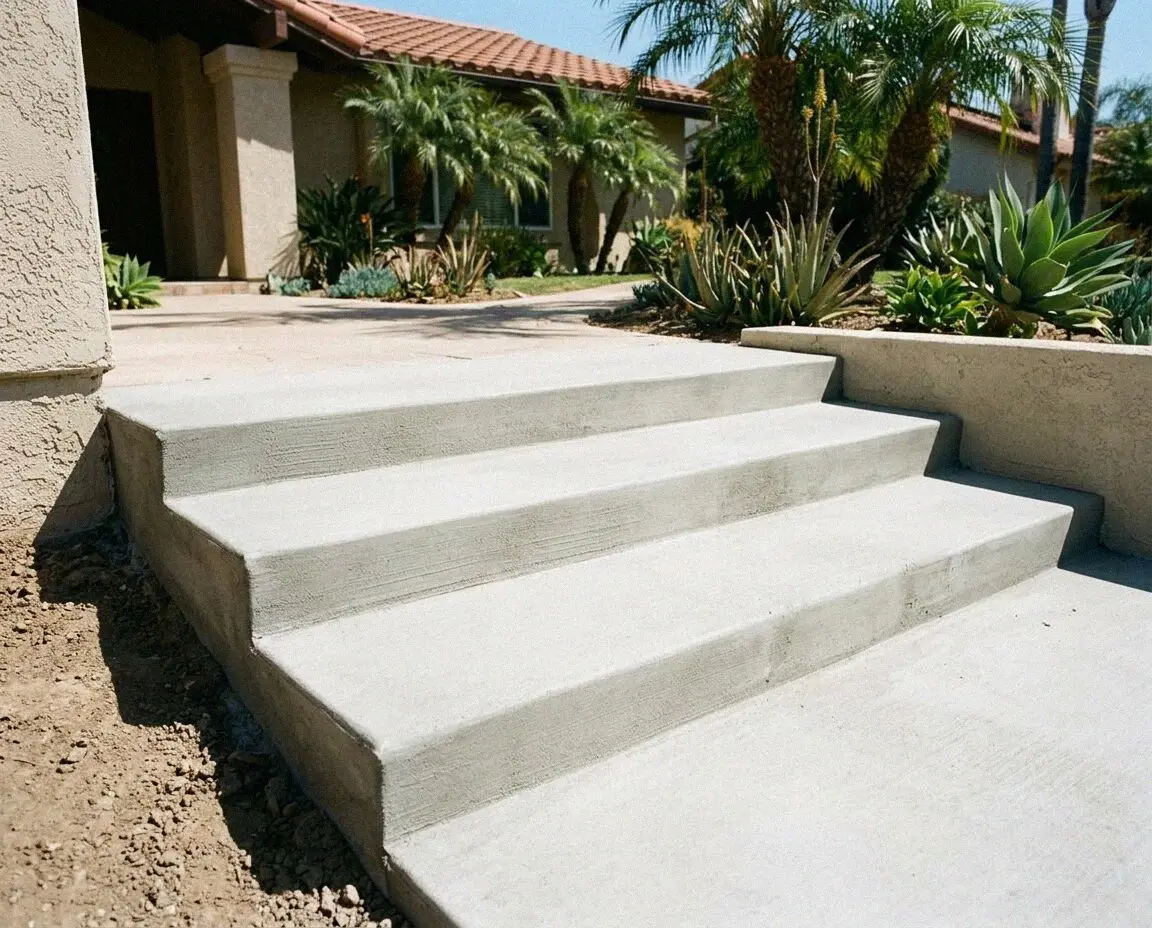
Steps poured on bare dirt, or a climb with no rail? We divide the rise again, foot both ends below the old fill and cast the flight whole.
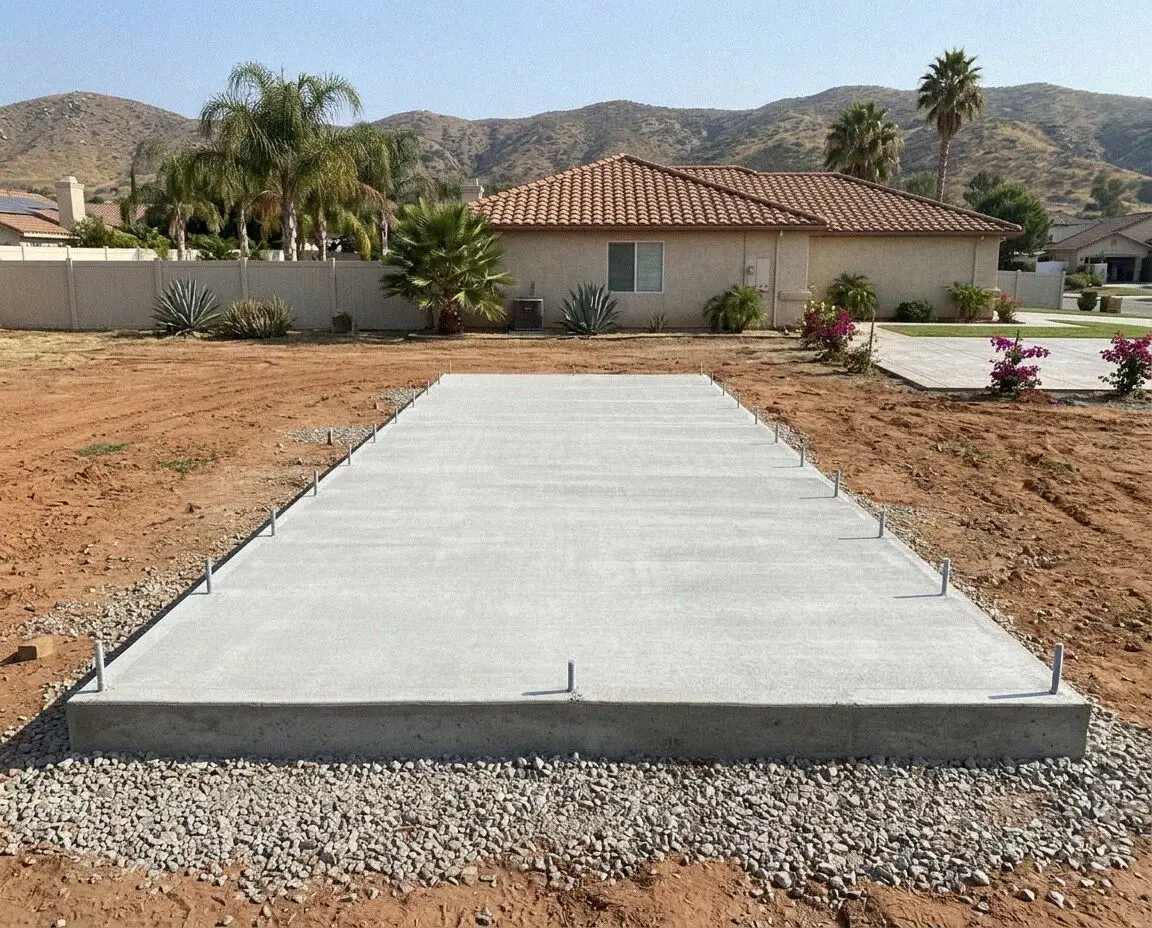
Building an ADU or a shop at the back of the lot? An engineered slab drawn to your own borings, whether that is river cobble or hill granite.
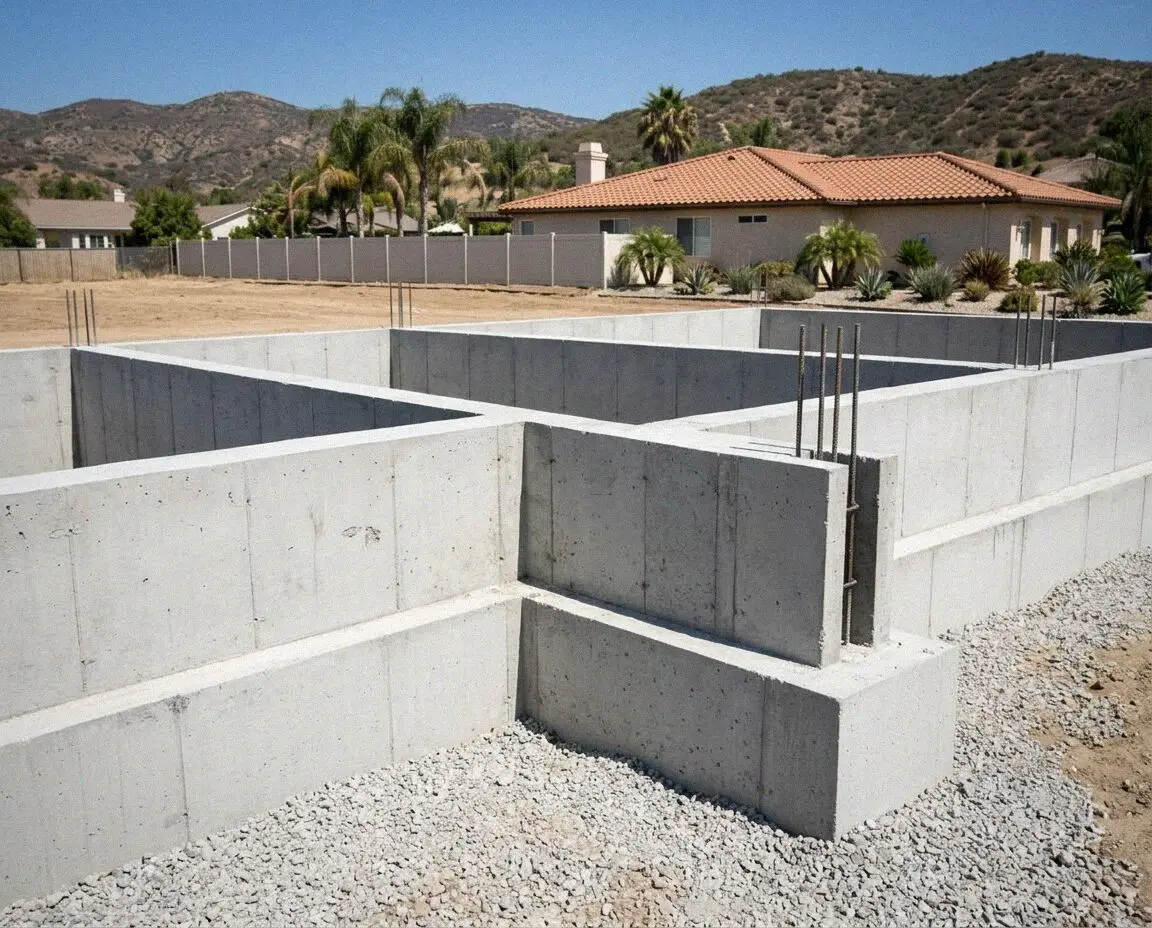
Adding a room or a unit? A new perimeter foundation set to the floor height the house already has, or a slab where the pad allows one.
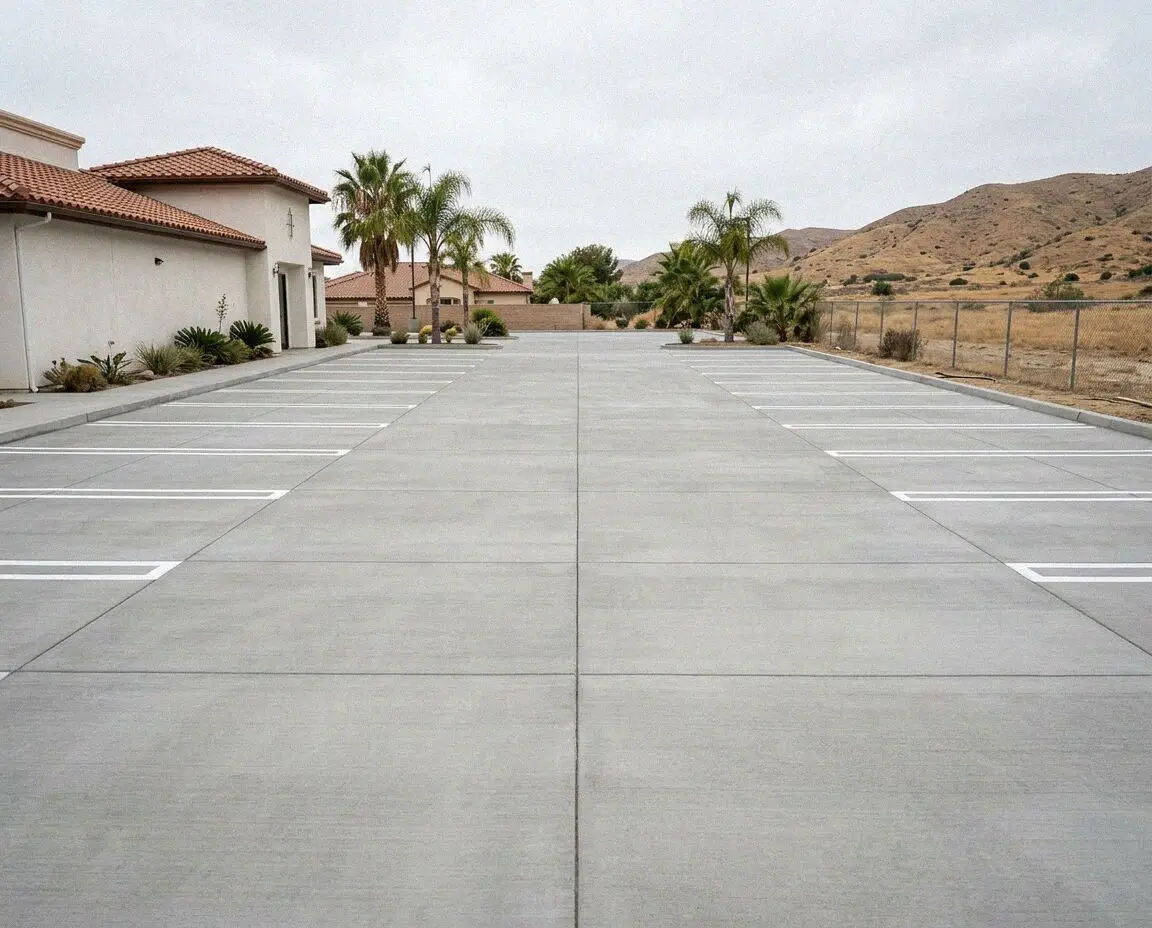
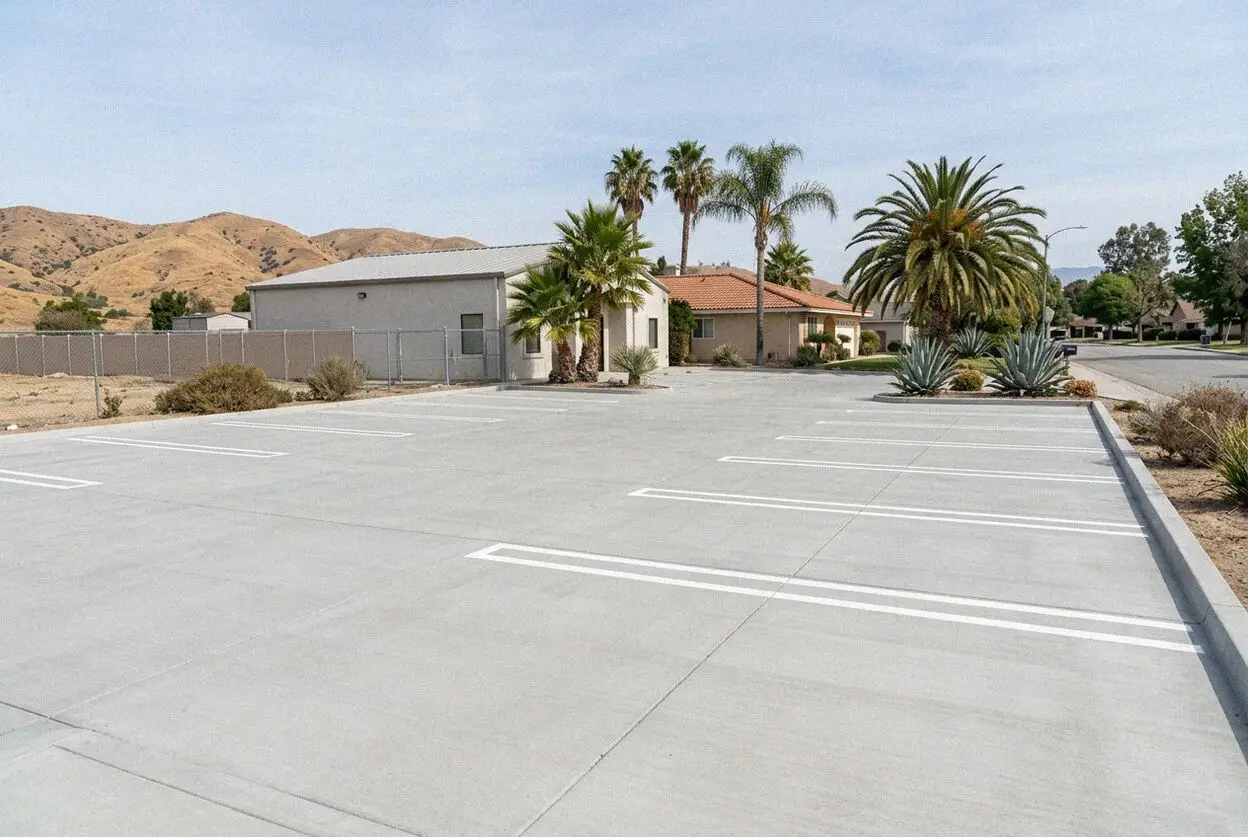
Trailer bays rutted or the dock approach breaking up? Commercial lots drawn to the axle load, 8 inches under the rigs, poured in sections.
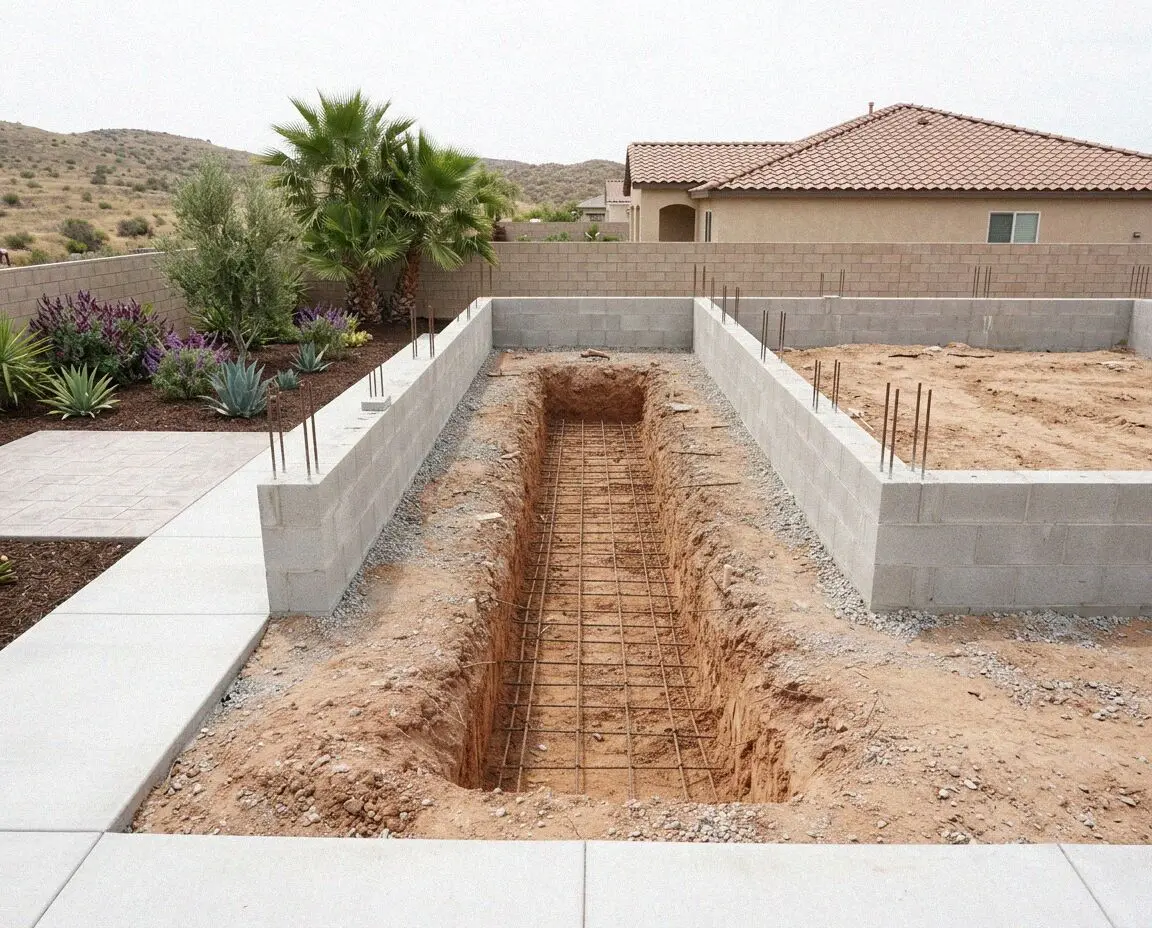
Footings under an addition, a shop or a patio cover, cut 12 inches into undisturbed soil, steel tied and inspected open before the pour.
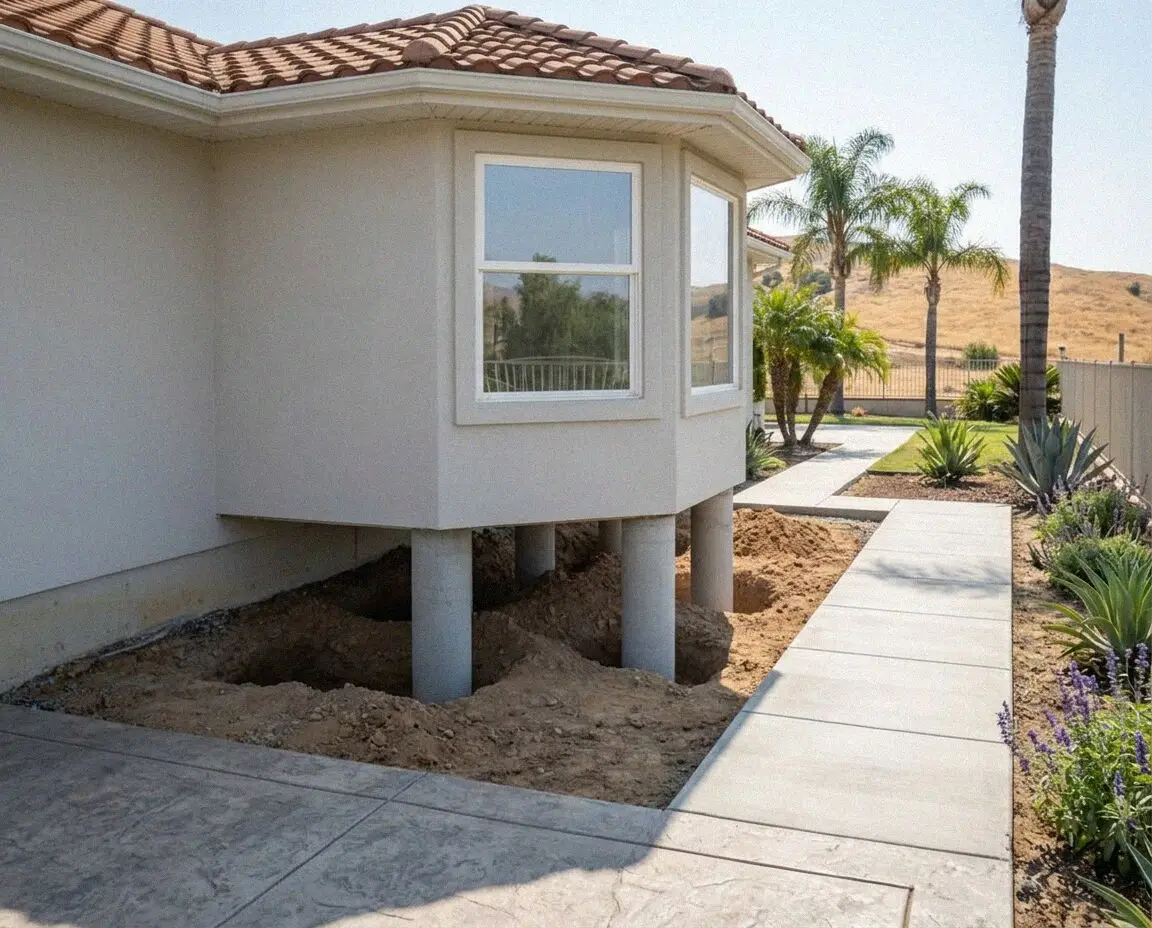
Floor sloping, or a slab dropped at one corner? We fill the space the ground left underneath and bring the concrete back to grade in a day.
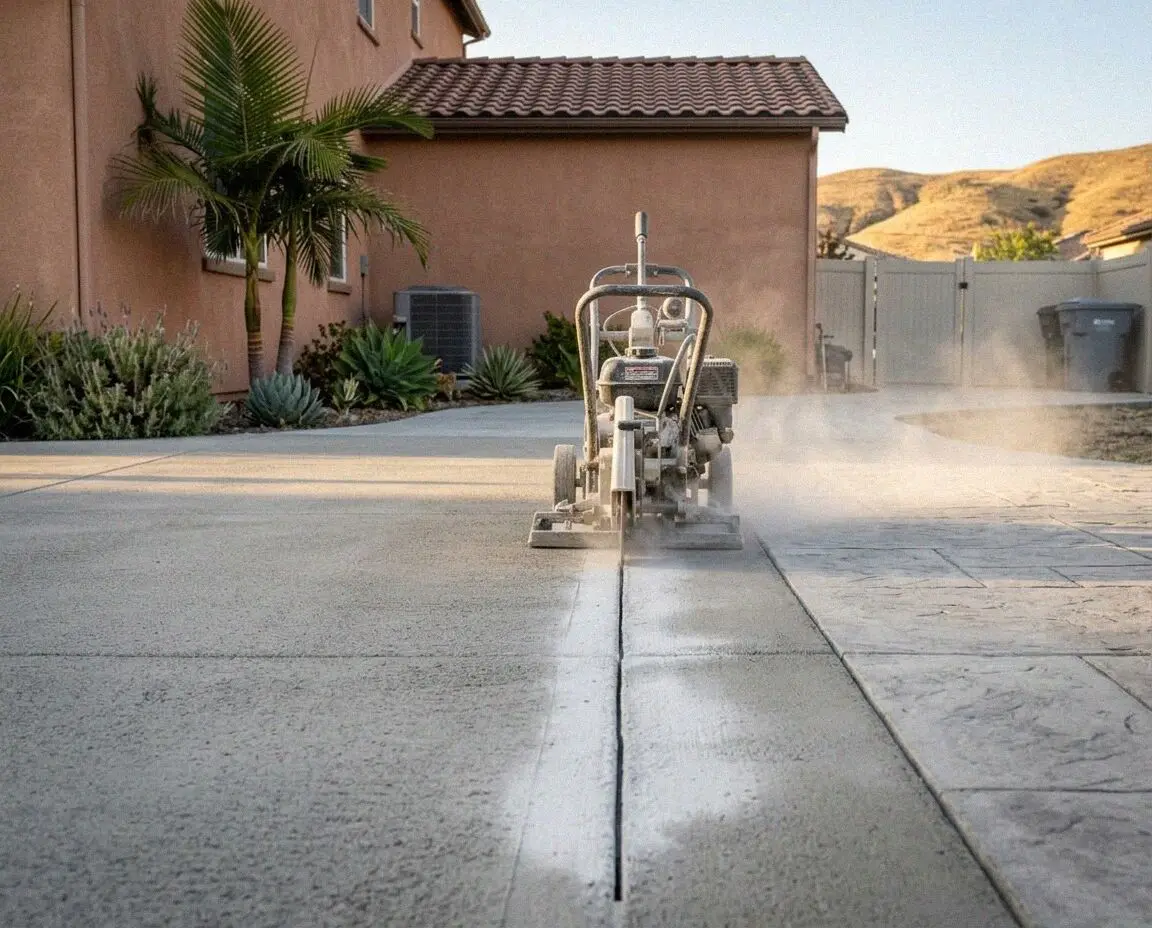
Need an opening in concrete that is already down? We scan it, saw it square and core it wet, from a bathroom trench to a warehouse dock.
Four stages between the phone call and a slab you can walk on. Whoever prices the work at stage two is on site pouring it at stage three.
Ring, or leave the form. You will hear from us within 1 business day, and the free visit goes in the diary for that week.
Daniel Reyes measures the area, opens the ground to see what is under it, then writes the figure out in parts rather than one total.
After you sign we lodge the permits, set a start date, and the crew works through break-out, base, forms, the pour and the trowel.
We clear up, then take you round the slab with the estimate in hand, base, thickness, joints, finish, and close the job when you agree.
The C-8 classification is concrete, and the California Contractors State License Board publishes who holds it, so look the business up by name. Insurance is carried on every job, which means damage done to your property while the crew is on it is ours to put right.
Daniel Reyes founded the business here in 2025 after 12 years on Inland Empire crews. The clay that swells under Glen Avon and Pedley, the winter wash across the river flats and the counter at the City Building and Safety Division are known first-hand, not read about.
The visit costs nothing. We walk the yard, measure the work and check the ground before anything is priced, then itemize demolition, base, pour, finish and cleanup in writing, so every part of the job is priced where you can see it before you decide.
What the guarantee covers is workmanship: the base, the thickness, the joints and the finish, written into the estimate before you sign it. If a crack traces back to one of those we come back and make it good. Normal wear is not a defect, and neither is ground that moves.
Questions before you decide? (951) 903-5460 or send us a message.
Customer Reviews
Homes and small businesses across the Inland Empire rate Jurupa Valley Concrete Pro 5.0 stars: on Google, on Facebook, and with the BBB.
“They measured our driveway on a Tuesday and handed me the written estimate before they left. The crew was on site four days, poured 540 square feet at 5 inches in one morning, cut the joints that afternoon, and after its first summer over 100 degrees there is not a crack in it.”
“A tree root had lifted the same sidewalk slab three winters running. They cut the root back, set a root barrier, poured the new section 4 inches on compacted base and pulled the right-of-way permit themselves. Ten months on it is still flat.”
“Our patio was original to the house, 1980s and crumbling. Daniel walked the base prep with me before they started: they dug out the clay, packed gravel in layers, poured 300 square feet in ashlar slate and sealed it at 28 days. It looks like cut stone.”
About Jurupa Valley Concrete Pro
Jurupa Valley Concrete Pro was set up in 2025 by a concrete foreman with 12 years on Inland Empire crews, and works out of Limonite Avenue. Houses, yards and small commercial slabs, from Rubidoux and Glen Avon out to Norco, Eastvale and Redlands.
Patios, driveways, slab foundations, retaining walls and stamped work, for a city that was nine separate communities until 2011, so no two neighborhoods here were built to one standard. What we build is guaranteed in writing.
The business is licensed C-8 for concrete by the California Contractors State License Board, and liability insurance is in force on every job. Building & Safety on Limonite Avenue issues the building permit and Public Works the encroachment permit, and we lodge whatever the job calls for. Every estimate is measured and written on site.
Our Standard
Every slab gets the same treatment: subgrade checked and compacted, a gravel base under it, a depth of 4 to 6 inches chosen for the traffic, and joints cut before the crew leaves.
All of them inside the city: a driveway in Rubidoux, a patio in Pedley, a wall holding back a slope in Glen Avon. Near enough that you can go and see one for yourself.
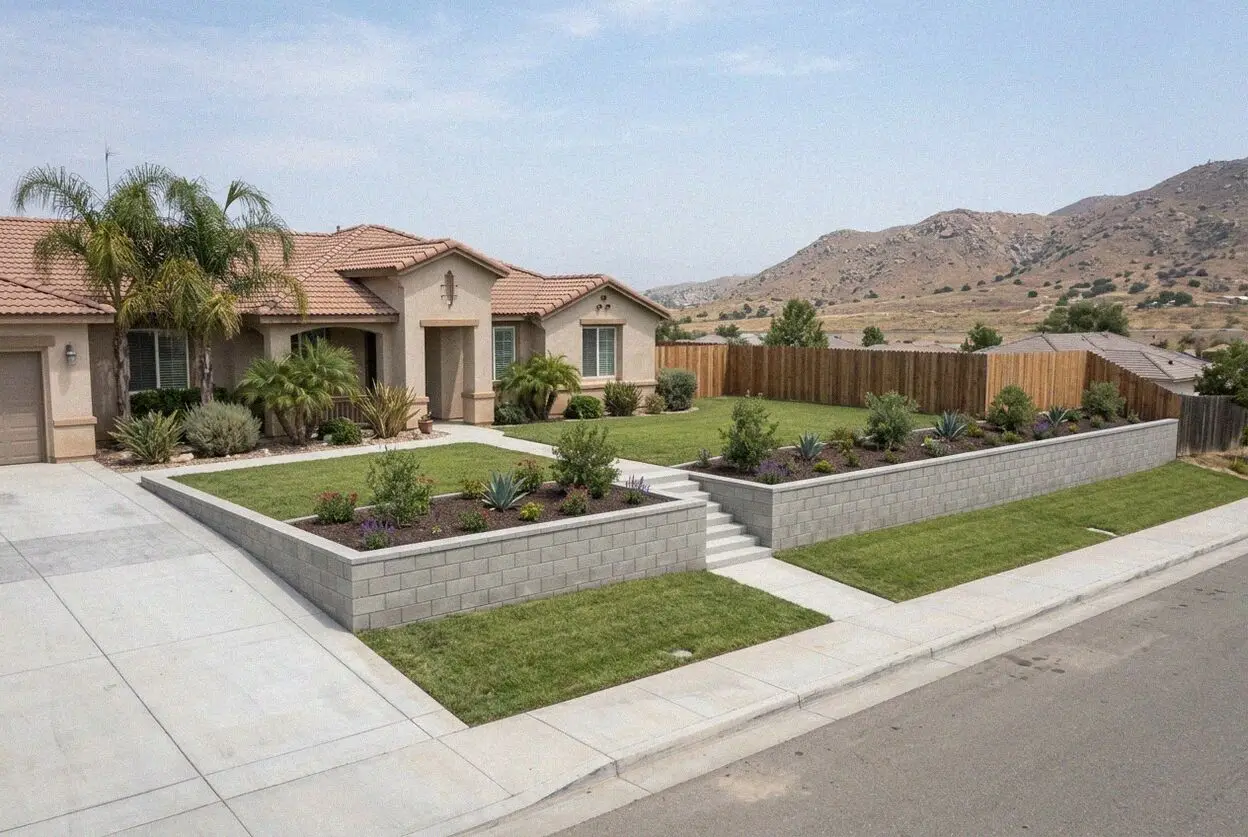
38 ft run at 4 ft high · Keyed footing, 24 in deep
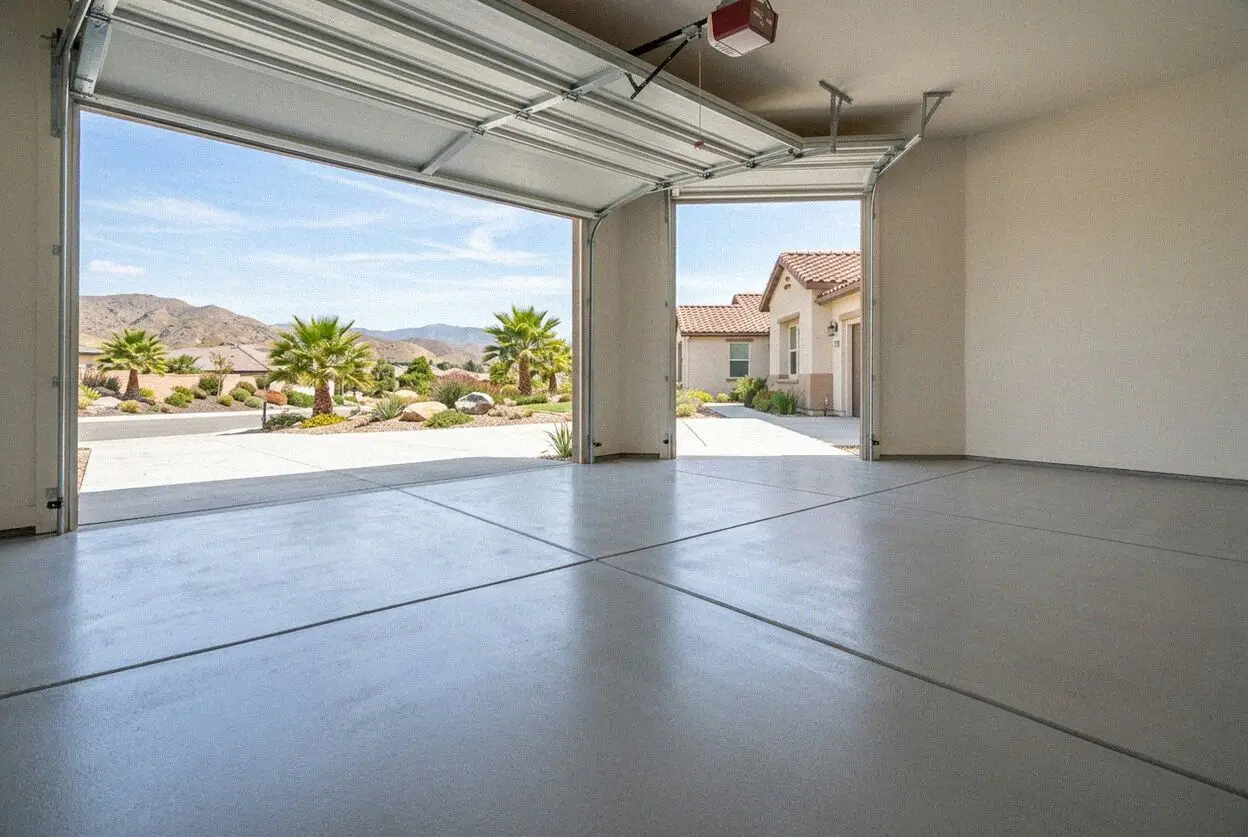
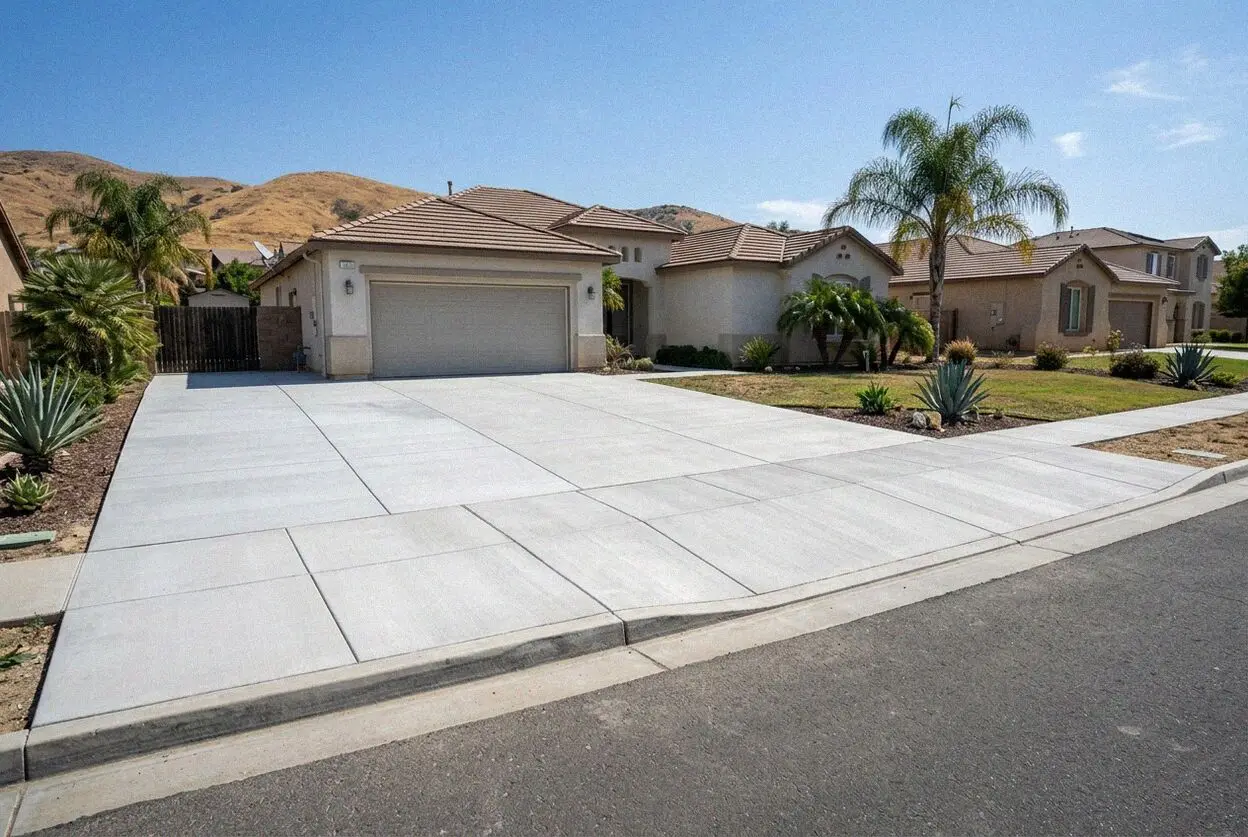
480 sq ft at 5 in · Vapor barrier under the slab

Daniel Reyes set Jurupa Valley Concrete Pro up in 2025 after 12 years on Inland Empire crews, from tract driveways in Riverside to warehouse slabs in Ontario. He lives in Rubidoux, the C-8 license is in his name, and he measures the job himself, so the figure on your estimate is his and so is the finish.
Local Knowledge
Clay soils that move with the seasons, housing built between 1970 and 2000, and a building department younger than most of the driveways it inspects.
Jurupa Valley incorporated in 2011, one of the newest cities in California, and its 43 square miles along the Santa Ana River are home to about 105,000 people. Most of the housing went up between 1970 and 2000 in the older communities the city was formed from, Rubidoux, Glen Avon, Pedley and Mira Loma, which puts the original driveways, patios and sidewalks at 25 to 55 years old, at or past the 30 to 40 years a well-poured slab lasts.
The ground changes across the city. The flats beside the river are sandy alluvium that settles under a slab poured on loose fill, while the older terraces under Rubidoux, Pedley and Glen Avon carry loams over a clay subsoil that swells in winter and shrinks by August. California code calls a soil expansive above an Expansion Index of 20, and much of the older housing here sits in that band, look your lot up on the USDA Web Soil Survey. So we build the base first.
Jurupa Valley issues permits through the City's Building & Safety Department, and any work at the curb or in the right-of-way also needs an encroachment permit issued by Public Works. Both are lodged by us, and the inspection confirms the base, the thickness and the drainage before the job is closed. We work the whole city, from the 1950s lots in Rubidoux and Belltown to the tracts off Limonite and Van Buren and the streets around the Jurupa Mountains Discovery Center.
Concrete wins in the Inland Empire, and the reason is heat: asphalt softens above 100 degrees and Jurupa Valley hits that mark on the hottest days. Pavers last as long, but they ride on a base that has to be built like a slab anyway.
| Option | Lifespan | Ready to use | Maintenance | In our heat and clay |
|---|---|---|---|---|
| Poured concrete | 30-40 years | 24-48 hrs on foot, 7 days for cars | Reseal every 2-3 years | Stays rigid at 110 degrees; control joints absorb clay movement |
| Asphalt paving | 15-20 years | Cars back on in 2-3 days | Sealcoat every 2-3 years | Softens above 100 degrees |
| Interlocking pavers | 25-50 years on a good base | Walk on it the same day | Re-sand joints every 1-2 years | Rides soil movement, but ruts and weeds at the joints |
Cheapest to lay is asphalt, and dearest to keep is asphalt. Pavers reverse that. Concrete falls between them on both counts, which is why most drives here are poured.
Yes, if the heat is worked around. Water leaves the top while the concrete beneath is still soft, and the surface shrinks and splits. A Jurupa Valley July averages 93 degrees and August 95, so we start before 8 AM and wet the slab the seven days the Portland Cement Association sets.
It is. Almost every failure begins underneath: a compacted gravel layer spreads weight and takes water away from the slab's underside, and without one the concrete bridges soft ground and splits where it gives. On clay it goes deeper and in layers, and none of it shows.
It is the number for how much a soil swells when it gets wet. California code calls a soil expansive above 20, and much of the older housing here sits in that band. Look your own lot up on the USDA Web Soil Survey; above 20 we dig deeper and compact in layers.
Straight grooves are put into the slab while it is green, at 2 to 3 feet for each inch of depth. Shrinkage will crack it somewhere, and a joint makes that somewhere a straight line. On ground that swells in winter they are what let the slab move without tearing.
Inside your lot line, usually not: the Residential Code names driveways and sidewalks, but not patios, so we ask. The curb and the driveway approach are right-of-way and need an encroachment permit, and a retaining wall over 4 feet needs a building permit. Both come from the City.
Under feet and cars, 4 inches. Under a truck, an RV or a workshop floor, 5 to 6. Depth costs less than anything else on the estimate and cannot be added later, and no repair puts it back. Whatever we pour is written down before the work starts.
The questions that come up on a Jurupa Valley driveway: what sets the figure, how deep it goes, how the ground is handled, jointing, sealing, permits, timing and the guarantee.
The number starts with depth, not with square feet: an inch added to a 4-inch slab means a quarter more material and a deeper base. After that it is what has to be broken out, whether the slope needs drainage, and the finish. All of it is measured on a free visit and written out, because a flat lot and a graded lot with a failing base are different jobs.
Yes, by barrow through a 36-inch side gate, or by line pump around the house, and access moves the estimate more than size does. A patio a mixer can reach is poured in a morning; one carried in by barrow is labor before it is material. Clay that needs deeper excavation adds base. We check the access, the ground and the finish on a free on-site visit, and the estimate itemizes each one.
Cars sit on 4 inches. A truck or an RV wants 5 to 6. Depth is the one thing that has to be right at the pour, because no repair adds it afterward and an inch short cracks under everyday use inside a few years. The figure is on the estimate before the work starts.
The base is the part that does the work, and most failures start below the concrete. Compacted gravel spreads weight outward and drains water off the underside; without it the slab bridges soft ground and cracks where it gives. On the clay terraces under Rubidoux and Pedley we excavate deeper and compact in layers.
They are shallow lines cut into the fresh slab at roughly 2 to 3 feet for every inch of depth. Each one makes a weak plane, so any crack lands there, straight and hidden, instead of crossing the surface. Every slab we pour is jointed, and on clay the panels are kept smaller.
Yes. Expansive clay swells in a wet winter and shrinks by late summer, and that movement lifts and drops a slab from below until it cracks. The older terraces under Rubidoux and Pedley carry most of it. We excavate deeper there, compact the ground in layers, lay a gravel base and cut control joints, so the ground can move and the slab stays whole.
Late fall to early spring, while afternoons hold below 90 degrees. Jurupa Valley sits in the mid-90s through July and August, and heat that draws water off a slab before it sets is where shrinkage cracks come from. Summer work is fine if the pour starts before 8 AM and the slab is kept wet for the first 7 days.
Yes, and more often than on the coast. Left bare, concrete takes in oil and water and holds the stain, and the ultraviolet load in Riverside County fades colored and stamped surfaces faster. Two to three years between coats, and less on a slab that faces the afternoon sun.
Site work runs 3 to 5 days for most homes, and the cure runs on after it. Demolition and base take the first two days, the pour is one morning, and the finish and the joints follow the same afternoon. Keep off for 24 to 48 hours, keep cars off for 7 days, and heavy vehicles off for 28.
Inside your lot line, usually not. The state exemption covers a driveway or sidewalk not more than 30 inches above adjacent grade; it says nothing about a patio slab, and the city publishes no exempt list of its own, so we ask at the counter. Curb, public walk and driveway approach are right-of-way and take an encroachment permit from Public Works. A wall over 4 feet from its footing takes a building permit.
It is. The workmanship guarantee covers how the slab was built, base, thickness, joints, finish, with the terms set out on the estimate before you sign. Staining, wear and ground movement past what the joints handle sit outside it, and a hairline that lands in a joint is the joint doing its job. If the fault is ours we come back and put it right.
On the calendar: you call or use the form and hear back within 1 business day; the site visit is inside the week, and the written estimate is handed over on the spot. Any permit adds the City’s review time, built into the start date. Work runs 3 to 5 working days from the agreed start and ends with the walk-through the day the joints are cut. Cars go back on the driveway 7 days after the pour.
Service Area
Concrete has taken us right across the Inland Empire, and the towns below are the ones we know best, their neighborhoods, the ground under them, the permit counter in each. Find yours in the list, or call and we will say whether we can get to you.
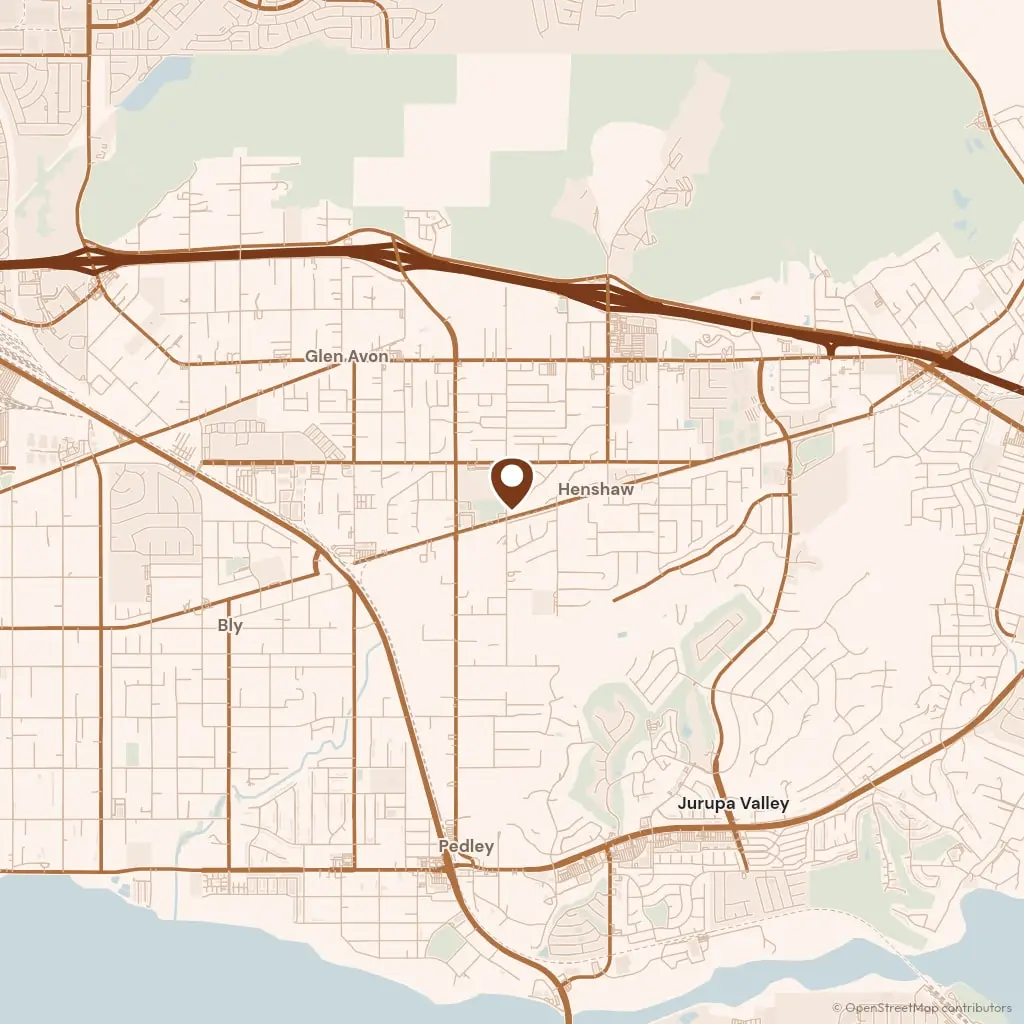 Open the Jurupa Valley Office in Google Maps
 Call, or leave the form and we come back within 1 business day. Daniel Reyes measures the work at your property and hands you the figure there: itemized, nothing owed, and no decision wanted on the day.