Serving Jurupa Valley, CA and surrounding areas.(951) 555-0159
SkyVale Jurupa Valley Concrete

Concrete Patio Construction in Jurupa Valley, CA, Sized for the Lots Out Here

SkyVale Jurupa Valley Concrete lays patios at 4 inches over compacted base, saw-cut into panels on a 10-foot grid, in a color picked to stay walkable in August. Every estimate is measured and written on site.

Google reviewsFacebook reviewsBetter Business Bureau reviews5.0 Stars Rated by our customers · Google, Facebook and the BBB
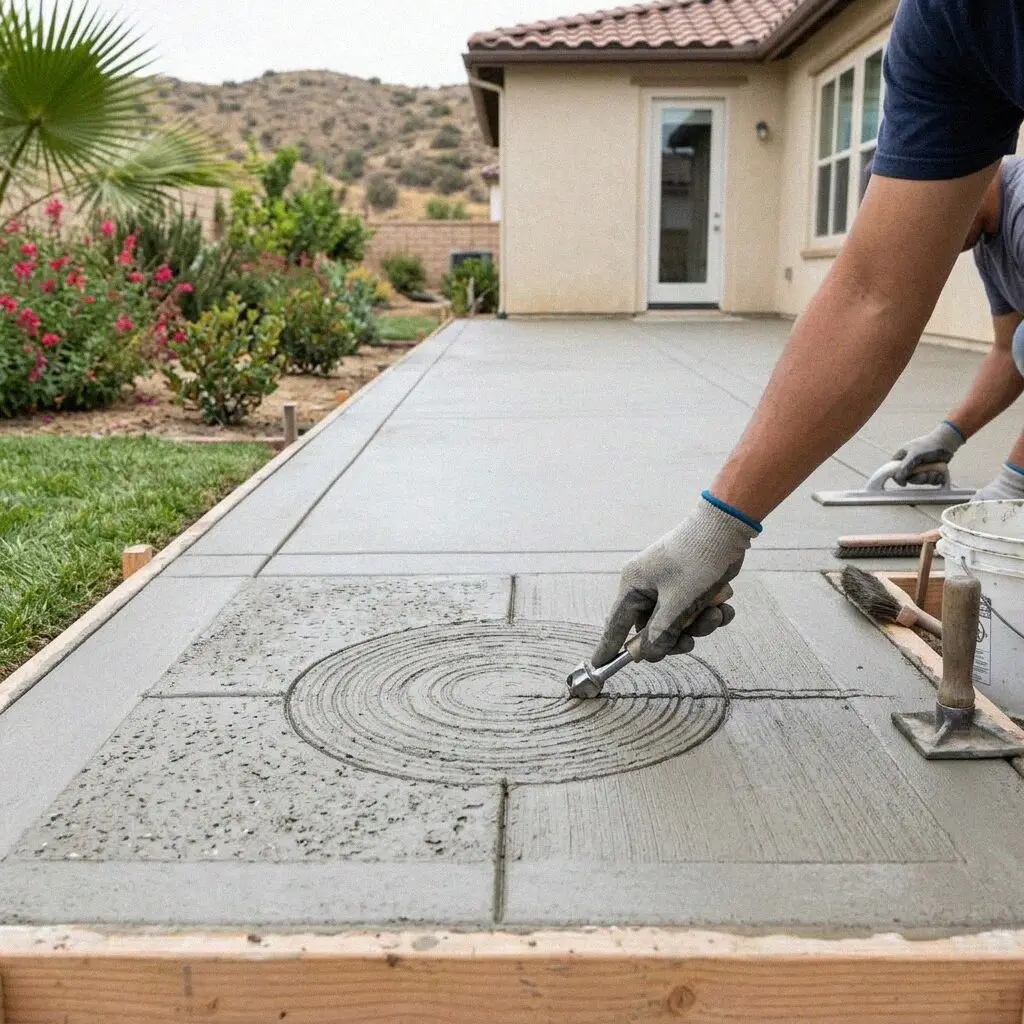
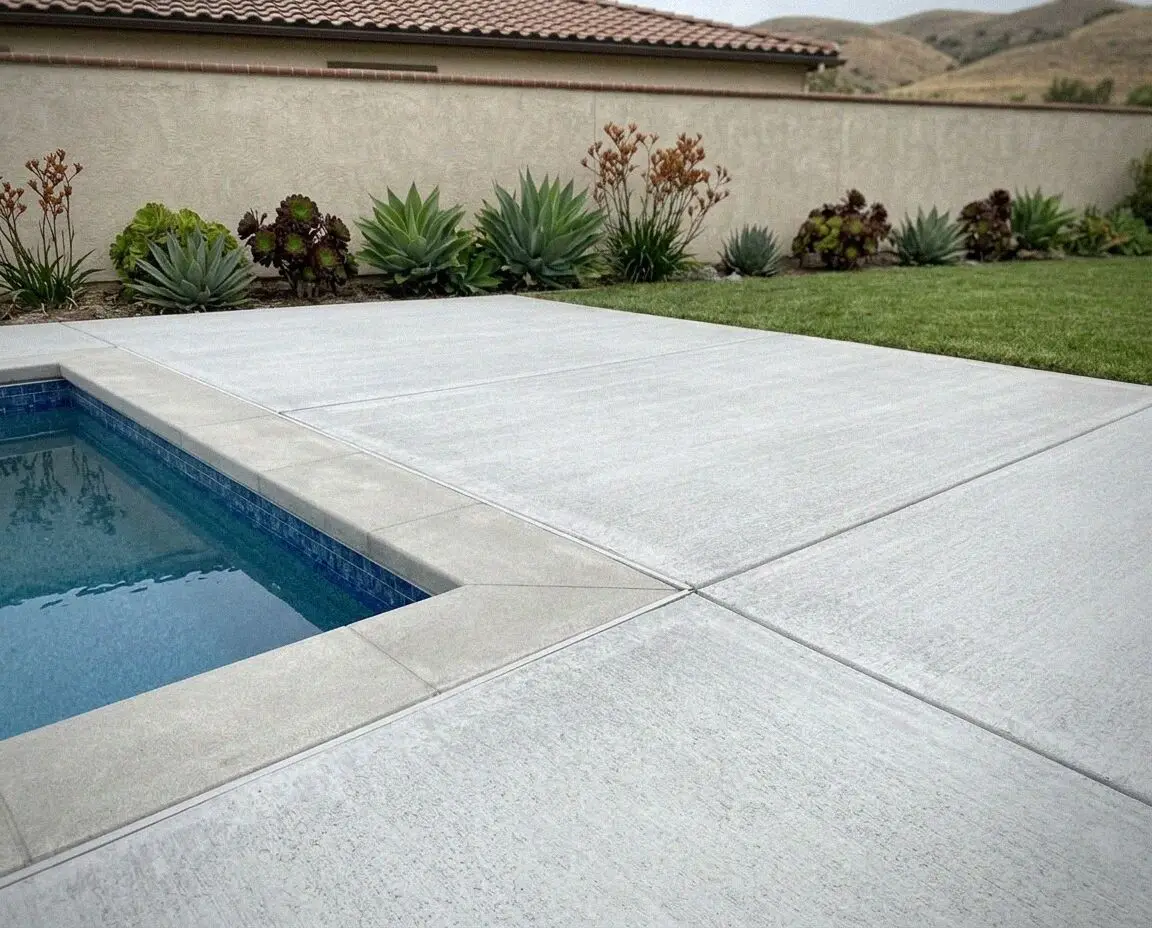
A broom-finished concrete patio behind a home in Jurupa Valley, CA
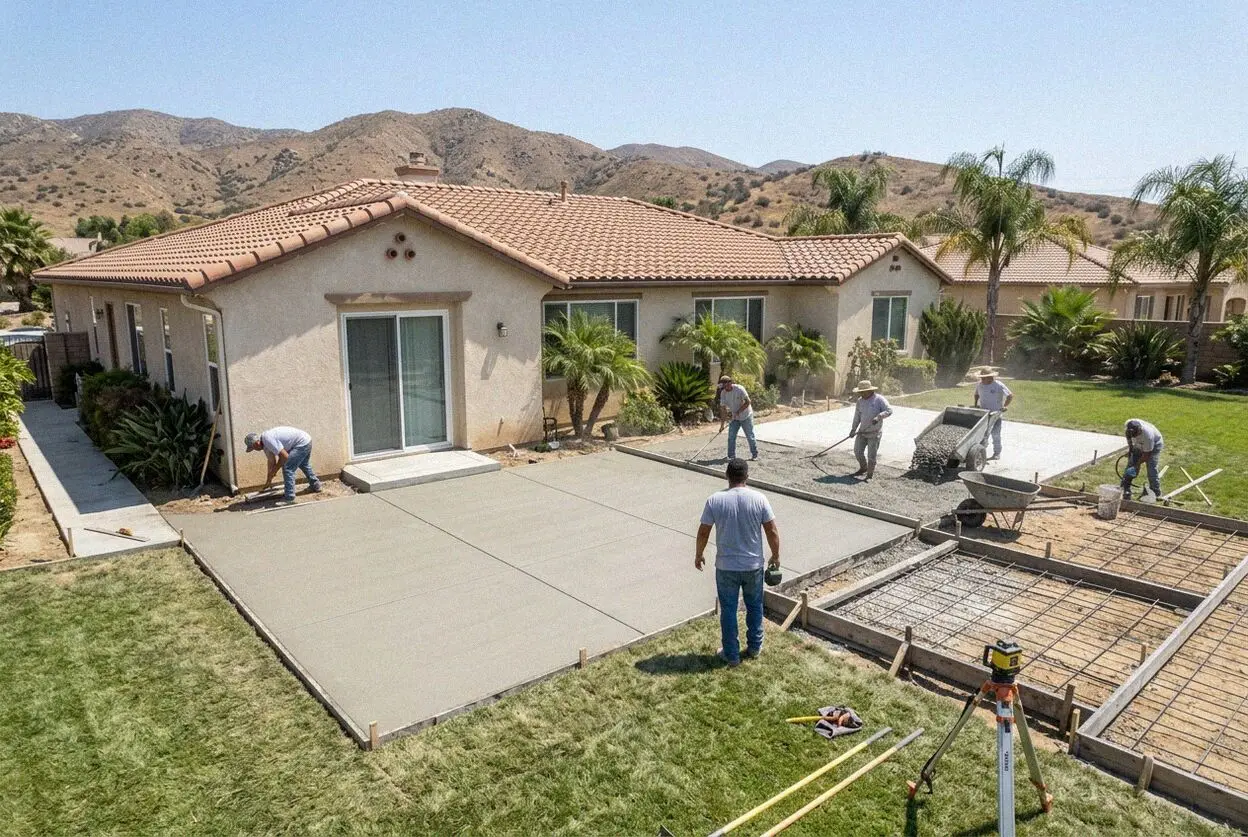
The crew floating a wide concrete patio slab at a Jurupa Valley home

Building patios here

How a Patio Gets Built in Jurupa Valley

A patio fails from underneath or from the middle. Underneath is the base: 4 inches of compacted Class 2 under a 4-inch slab, so nothing bridges a soft seam and drops into it. The middle is the joints, because concrete shrinks as it cures, and a slab wide enough to hold a table, a barbecue and a seating group has to be cut into panels close to square the same day it goes down.

Daniel Reyes founded SkyVale Jurupa Valley Concrete in 2025, after 12 years finishing flatwork on Inland Empire crews, and he marks the joint grid on every patio himself. On most lots out here the back patio is the largest single pour on the property, wider than the driveway, which is why the outline is pegged at full size and walked with you before a figure is written down.

Every patio is poured against a CSLB C-8 concrete license, with liability insurance on every job standing behind it, and built to the California Residential Code - which fixes the base depth, the slab thickness and the drainage rather than leaving any of the three to preference. What lands in your hands at the end of it is a written workmanship guarantee against defects in how it was built, and the crew that poured the slab is the crew that comes back out on it.


Time to replace it

When Is a Jurupa Valley Patio Worth Replacing?

A crack that wanders

Concrete shrinks about an eighth of an inch across every 10 feet as it cures, and a wide slab nobody cut into panels finds its own line to do that on. The crack has finished moving but the two halves have not, so a filled line opens again by the second winter.

A lip at the slab edge

River sand carries its fines wherever water runs through it, so a leaking irrigation line or one winter storm can scour a channel out from under a patio edge on the flats. What shows is a lip you can get a finger under. The concrete is sound; what held it up has gone.

Nobody uses it after noon

A dark sealed patio on an open lot here is well past 140 degrees by mid-afternoon in July. That is not a defect, but it is several hundred square feet doing nothing for four months of the year, and no sealer or coating brings the number down far enough to matter.

The downhill edge dropping

On the Jurupa Hills slopes a patio sits on a bench cut into decomposed granite, and granite ravels once a cut face is left open to the weather. When the bank below starts shedding, the downhill edge of the slab loses what it stands on and tips toward the drop.

What's included

Every Jurupa Valley Patio We Pour Includes

Standard on every patio, never a line added back later. Each one answers something a deep lot on this side of the Santa Ana River does to a slab that a small tract garden never would.

Old slab out to soil

Whatever is there comes out to soil and leaves the site that day. A new slab laid over an old one inherits every line already in it.

Truck routed to the forms

Lots out here are wide enough that a mixer usually reaches the back, so even 600 square feet arrives as one continuous placement.

Base compacted in lifts

Caltrans Class 2 base is laid in two lifts and taken down with a plate, so the concrete rests on something drained that has stopped moving.

Four inches, 3,500 psi

Four inches deep out of a Riverside County batch plant, and deepened at any point where something heavy is going to stand on it.

Fall set off the house

The forms are set so the finished surface drops a quarter inch per foot away from the house wall, and that is levelled off before the pour.

Joints on a 10-foot grid

Saw-cut the day of the pour, a quarter of the way down, into panels close to square, so shrinkage lands on a line somebody chose.

Edge thickened for a cover

Where the posts of a shade cover are going to land, the slab is deepened and tied at those points on the day rather than drilled later.

Seven days of curing

Curing compound down the same afternoon and the surface kept damp for a week, which is what a pour through a summer here needs.

Your options

Four Patio Finishes, Compared for August

The same 4-inch slab can be finished four ways, and out here the first question is not how it looks but what it does at three in the afternoon in August, which is what settles whether a patio is used from June to September.

OptionMidday in AugustLifespanUpkeepDays on site
Gray broom finishWarm, still walkable barefoot until about noon30 to 40 yearsReseal every 4 to 5 yearsPoured in one morning, used in a week
Integral-color broomCoolest in a sand tone, hottest in charcoal30 to 40 yearsReseal every 4 years, the color is in the mixPoured in one morning, used in a week
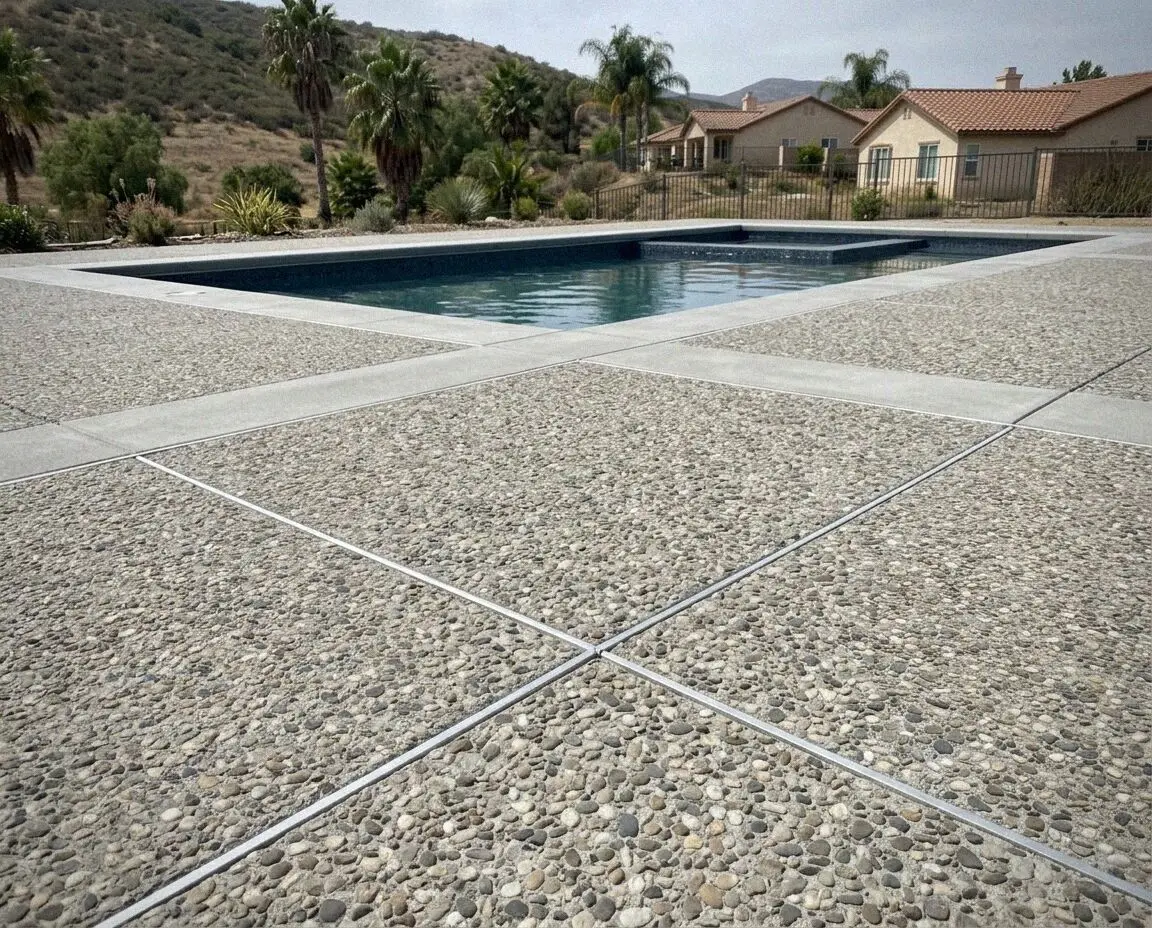
Exposed aggregateCooler than a sealed top, and grips when wet35 years or moreReseal every 4 years and rinse it down each springTwo mornings on site, used in a week
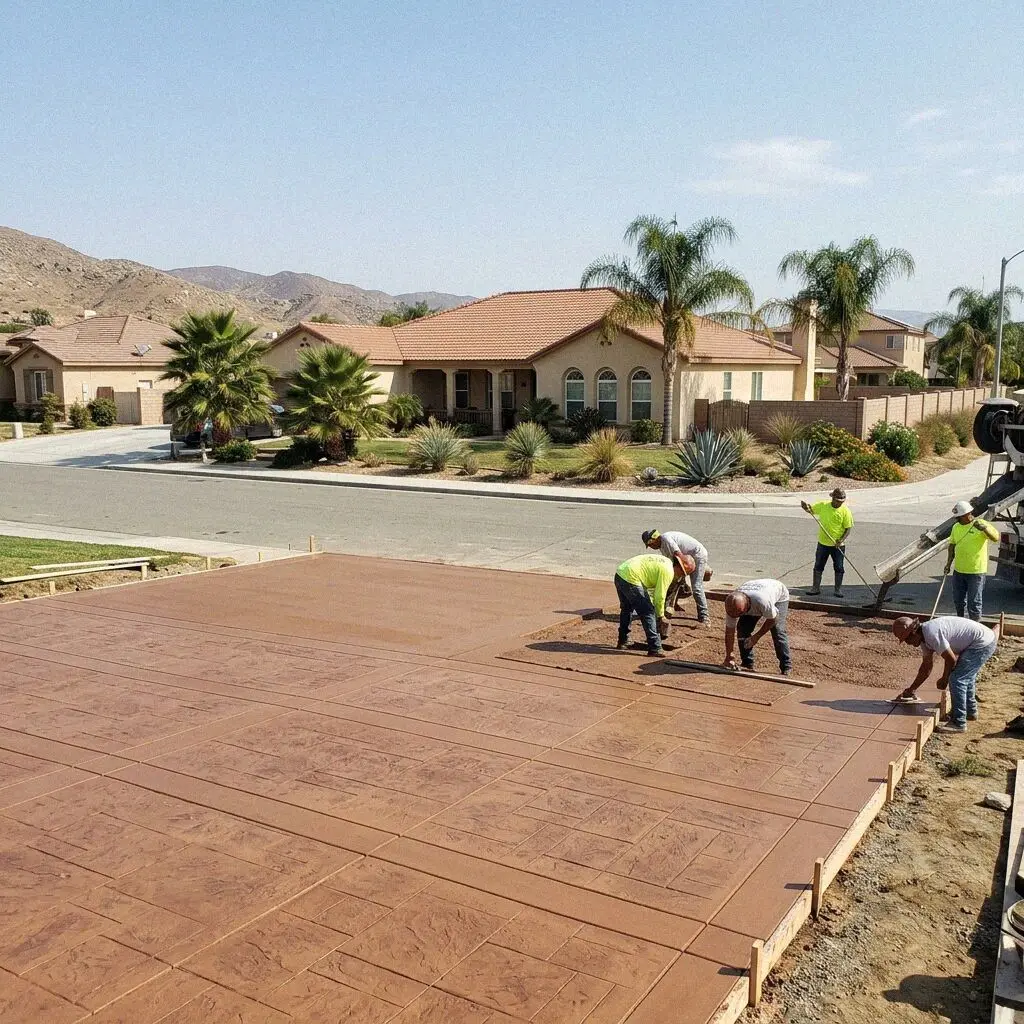
Stamped concreteSealed and patterned, hot from June to September25 to 30 yearsReseal every 2 to 3 yearsTwo to three days on site, used in a week

Color does more for surface heat than the material does: a sand tone mixed into the concrete reads cooler underfoot than a charcoal one on the very same broom finish.

Crew finishing a large concrete patio slab on a Jurupa Valley lot

Local knowledge

The Ground and the Sun on a Jurupa Valley Lot

Two things set a patio on this side of the river: how much room the lot gives it, and which of two very different grounds it ends up sitting on.

The city runs from the Santa Ana River bottom up onto the Jurupa Hills, and the two ends behave differently under a slab. The flats through Rubidoux and Mira Loma are river sand that compacts well and drains in an hour, but that will move its fines the moment water gets under an edge. Up on the slopes it is decomposed granite, firm to build on and quick to ravel wherever a cut face is left open. We read the lot against the USDA Web Soil Survey and dig to what the probe finds.

Room is the other half. Lots here are semi-rural and deep, some of them still horse property, so the patio people ask for runs 500 to 700 square feet rather than the 300 a tract garden takes. That much open concrete is a heat surface as much as a floor, and afternoons in the mid-90s mean the color and the shade over it matter more than the pattern on it. We pour across Rubidoux, Pedley, Glen Avon, Mira Loma and Sunnyslope, five of the nine communities the city was made from in 2011.

Our process

How a Patio Job Runs Here, First Call to Furniture

Five stages from the day it is pegged out to the day the furniture goes on. One crew from the measurement through to the walk-through, and the finish settled before anything is ordered.

1

Measured out on the lot

Daniel Reyes pegs the outline at full size, reads the fall off the house and probes the ground, then leaves the figure with you in writing.

2

Layout, finish and color

You settle the size, where the joints fall, and the color, which is the decision that sets how the finished slab feels in August.

3

Break-out and dig

The old surface leaves the site, the subgrade is opened and probed, and base goes in and is compacted in two layers to depth.

4

Forms, pour and finish

Forms go in to the fall you signed off, then the placement and the finish, started at first light in summer so it closes by mid-morning.

5

Joints, cure, hand-over

Joints saw-cut inside 12 hours, curing compound down, the lot swept. You go over the slab with the owner and the paperwork is signed.

What moves the estimate

What Moves the Number on a Jurupa Valley Patio?

Area sets the figure first and the ground below sets the rest. A back patio on a lot out here commonly runs 500 to 700 square feet, and whatever has to be dug away underneath it decides how much of the week goes on machines.

Area and outline

500 to 700 square feet is normal here. A curve or a step down to the yard adds forms, and forms are what the day is spent on.

What is under it

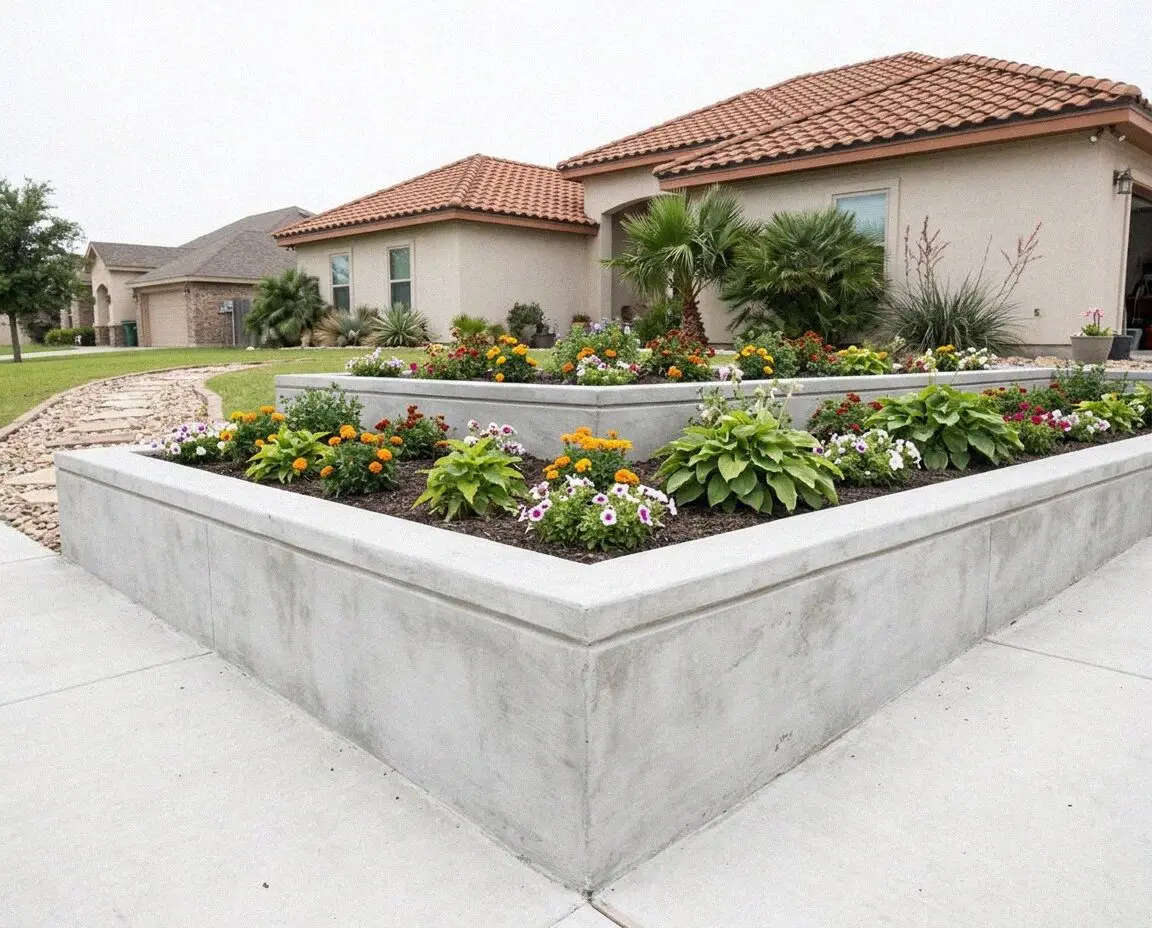
River sand on the flats takes base and little else. A granite bench on a slope takes a cut, a low wall and the spoil hauled off.

Shade over the slab

A pergola wants thickened, tied points in the pour. A solid roof is a structure, and that one is drawn and permitted before we dig.

Finish and color

A gray broom finish is one pass. Integral color, exposed aggregate or a stamp each put more hands on the slab before it sets.

The visit costs nothing, the figure is written out on the lot itself, and you get a call back within 1 business day to put a date on it. (951) 555-0159 or send us a message.

Ready to price a patio on your own lot?

Use the form or the phone, whichever suits, and someone is back to you within 1 business day. Daniel Reyes pegs the outline out on the lot and writes the figure standing on it, and you owe nothing for that either way.

Request a Free Estimate

Written on site · No obligation

By submitting, you agree to our disclosure and consent terms, including being contacted by SkyVale Jurupa Valley Concrete.

Reviews

What Jurupa Valley Homeowners Say About Their Patios

Three reviews from homeowners on this side of the river, every one of them about a back patio rather than a drive, a wall or a garage floor. Left on Google and Facebook.

Google review

“Our lot backs onto the arroyo and we wanted the whole thing done at once, 640 square feet. Daniel pegged it out and told us the charcoal we had picked would cook in July, so we went with a sand tone. Poured in a morning, joints cut that afternoon, and we sit out there in August.”

Alma V. of RubidouxConcrete Patio Construction · Google · 2026
Facebook review

“The old patio had a crack right across the middle and water was getting under the edge where a sprinkler line had been leaking. They found the washout before they quoted, took the slab out, rebuilt the base and cut the joints on a grid. One wet winter since and it is flat.”

Ray S. of Mira LomaConcrete Patio Construction · Facebook · 2026
Google review

“Ours is cut into the hillside and the bank kept shedding onto the concrete every time it rained. They benched it properly, put a low wall along the downhill side and poured 520 square feet against it. Nothing has moved, and I am not sweeping granite off it any more.”

Teresa L. of Glen AvonConcrete Patio Construction · Google · 2025

FAQ

Questions About Concrete Patios in Jurupa Valley

Thickness, joint spacing, permits, surface heat and what the guarantee covers - answered for a wide back patio on a lot here, not for concrete in general.

(951) 555-0159
  • How thick is a concrete patio slab out here?

    Four inches, on 4 inches of compacted base, carries furniture, people and a barbecue. Depth only goes up beneath a single heavy point: a spa, a built-in island, a cover post. There the slab is deepened at that spot, rather than the whole area being poured thicker for the sake of one corner of it. What goes down is written on the estimate.

  • How far apart should patio control joints be cut?

    Two to three feet of spacing for every inch of thickness, which puts a 4-inch slab on a grid of about 10 feet, in panels close to square. The cuts go in within 12 hours of the pour and a quarter of the way through the depth. On the wide patios common out here, that grid is the difference between a crack you chose and one the slab chose.

  • Do I need a permit for a patio in Jurupa Valley?

    Usually nothing for the slab, but the exempt list in the California Residential Code names driveways and walkways rather than patios, so we put it to the counter instead of assuming. A roof built over the top of it, or built-in cooking with gas and water run out to it, counts as a structure and goes to the Building and Safety Department at the City of Jurupa Valley. We file it and stand the inspection.

  • Which patio finish stays coolest through the summer?

    A light broom finish, with a sand tone mixed into the concrete and no sealer over it. Color does more than material here: the same slab in charcoal runs far hotter than in a pale gray, and a sealed surface adds to that again. Jurupa Valley sits in the mid-90s through July and August, so on an open lot the color gets picked for the heat first.

  • When can the furniture go back on a new patio?

    Stay off it for 24 to 48 hours. The table and chairs go back at 7 days, and a spa or anything else heavy waits for 28, which is when the mix has reached full strength. Green concrete scores under a dragged chair leg and the mark never lifts out of it. You get those dates written down on the day it is poured.

  • Can a shade cover go up over the patio later?

    Yes, if the slab was poured expecting it. Posts want a thickened, tied point beneath them, and adding one to a finished patio means core drilling and digging blind beside concrete you have already paid for. Put in on pour day, the same point is an hour with a shovel. Say where the posts land at the measurement, even if the cover is years away.

  • How big should a back patio be on a lot this size?

    Bigger than most people first sketch. A table for six with the chairs pulled out takes about 12 by 14 feet on its own, and once a barbecue run and a seating group go beside it you are at 500 to 700 square feet, which is where most lots on this side of the river settle. The outline is pegged at full size in front of you before anything is priced.

  • What exactly is guaranteed on a new patio?

    It is written down, and the wording carried on your estimate is this: a written workmanship guarantee against defects in how it was built. It answers for our work - the compaction, the joint layout, the drainage off the house wall and the finished surface. It does not answer for a hairline that follows a cut joint, since that is where shrinkage is meant to land, or for a slab somebody has driven a truck across.

Service area

Towns We Build Patios In Beyond Jurupa Valley

The eight nearest first, with the straight-line distance from the yard on Limonite Avenue beside each. Open any town to read the page written for it.

Show All Areas We Serve

Start Your Jurupa Valley Patio Project

One call or one form, and the visit is booked within 1 business day. The outline gets pegged out on your own lot, the figure is written there in front of you, and what you do with it after that is up to you.