Serving Jurupa Valley, CA and surrounding areas.(951) 555-0159
SkyVale Jurupa Valley Concrete

Concrete Retaining Walls in Jurupa Valley, CA, Holding Graded Pads and Driveway Cuts

SkyVale Jurupa Valley Concrete founds walls at 24 inches on ground the trench proves, runs gravel and a pipe behind every stem, and draws and files anything standing over 4 feet.

Google reviewsFacebook reviewsBetter Business Bureau reviews5.0 Stars Rated by our customers · Google, Facebook and the BBB
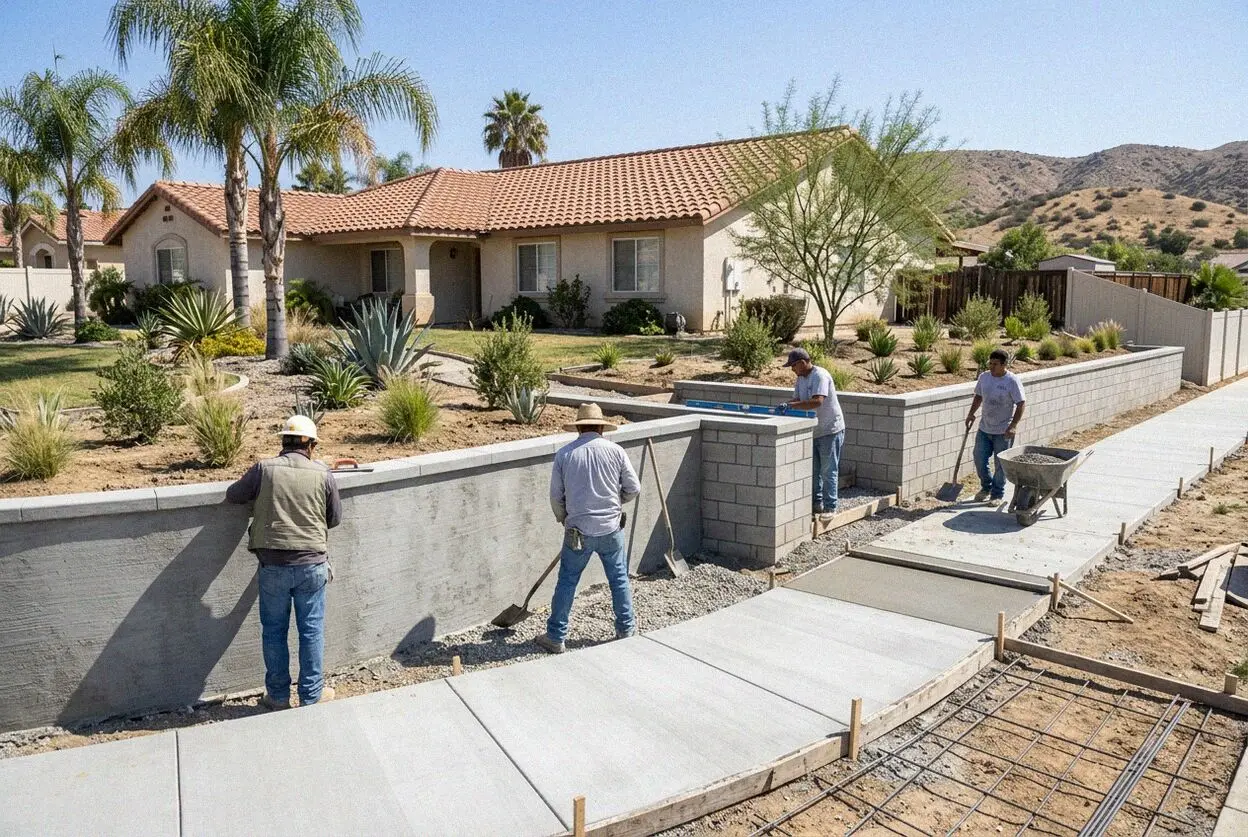
Crew forming a concrete retaining wall on a Jurupa Valley slope
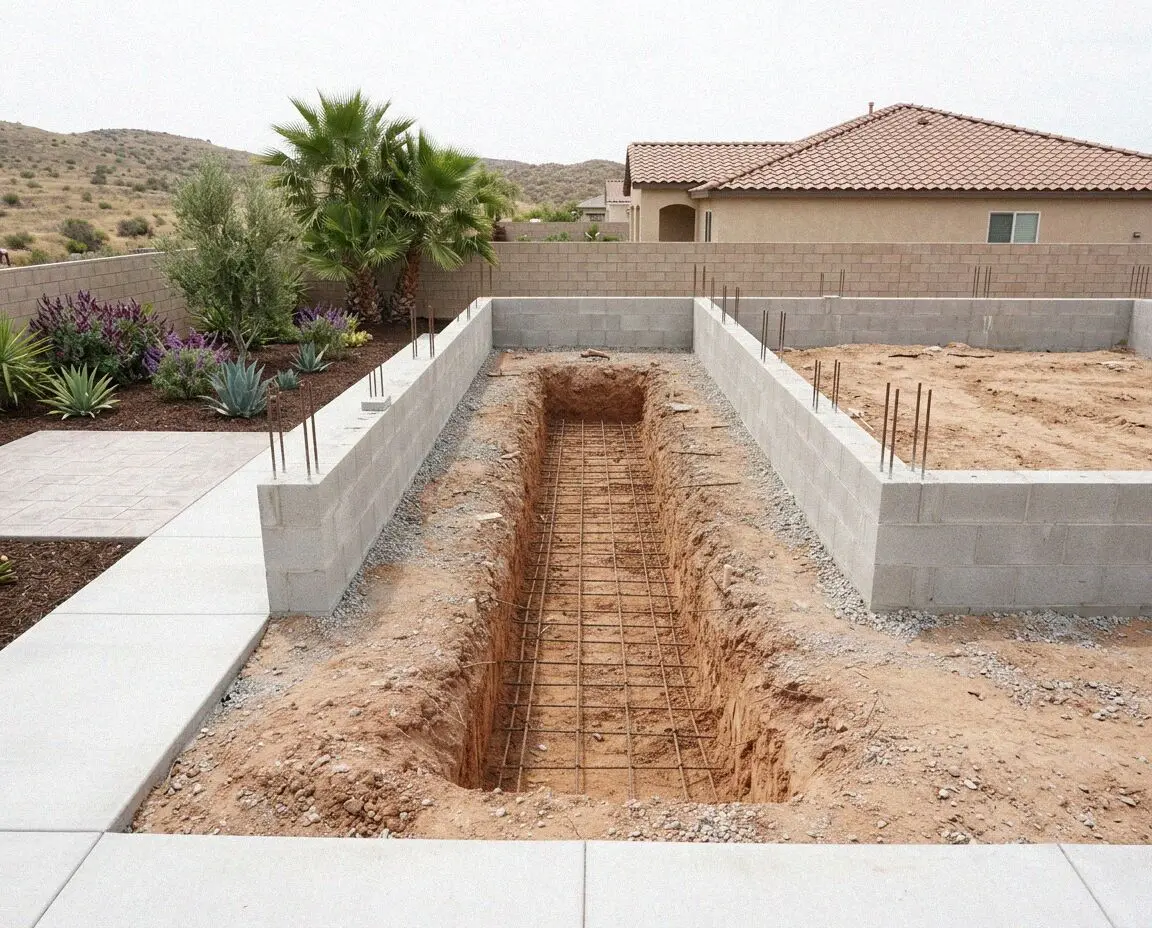
Rebar tied into a wall footing trench at a Jurupa Valley home

Walls under the Jurupa Hills

What Holds a Jurupa Valley Retaining Wall Up

A wall here is decided by what the trench bottom turns out to be. The Jurupa Hills and the Pedley Hills weather down to decomposed granite that a footing bears on well and water moves through, while the low ground beside the Santa Ana River is sand and rounded cobble that carries less and gives a toe almost nothing to press back against. Two lots a mile apart can want different footings for the same 5 feet of wall, which is why depth is settled in the open trench, not on a drawing.

Daniel Reyes started SkyVale Jurupa Valley Concrete in 2025, after 12 years on Inland Empire crews, and he still sets the footing line on every wall. Parcels here run large and half rural, so a wall is usually working for its living: it holds the cut a driveway drops through, the platform a shop or a barn stands on, or the level ground a trailer parks on. Very few of them are garden edging.

Walls go up under a CSLB C-8 concrete license with liability insurance on every job. Once a wall stands taller than 4 feet with its footing counted in, it is drawn, filed and inspected through the Building and Safety Department at the City of Jurupa Valley before a trencher comes off the trailer, and where something parks above the crest an engineer stamps the drawing for that load. The work carries a written workmanship guarantee against defects in how it was built.


Before it comes down

Four Signs a Jurupa Valley Wall Is on the Move

A gap opening behind the cap

Run a finger along the joint where the cap meets the fill behind it. A gap that was not there last spring says the top of the wall has travelled, and on a wall with no drain the thing moving it is rain standing in the backfill. It widens every wet season and it never closes back up.

Ruts in the drive above it

A driveway or a trailer pad that has begun to dip within a wall height of the crest is loading the stem, not just wearing the surface. That weight is a surcharge the wall may never have been sized to hold, and a wall carrying one it was not built for rotates outward before it cracks.

Grit washing out of the weeps

Granite grit coming through the weep holes and piling at the base means the drain behind the wall was laid without filter fabric. The fines leave the backfill a spoonful at a time, so the ground behind loses volume and drops, and the rock that should be draining packs itself solid.

A pad edge breaking away

Concrete crumbling along the edge of a slab the wall holds up means the fill under that edge has moved out with the wall. A pad is stiff and the ground beneath it is not, so it breaks along the line where it loses support. From then on the wall carries a broken slab as well as soil.

No add-ons

What Comes With a Wall in Jurupa Valley

Eight things on every wall we build, priced in from the start. Each one settles something this ground raises: what the footing lands on where granite gives way to river sand, and how the water behind the stem gets out.

The old wall out first

Railroad ties or dry-stacked block come out along with the soil that failed behind them, so the new footing bears on ground nobody stacked.

A probe of the trench bed

The bottom is probed the length of the run, because firm granite and loose river cobble can both turn up on one Jurupa Valley lot.

Footings at 24 inches

Trenched to 24 inches, deeper where the probe finds cobble or old fill, and widened as the retained height goes up.

Steel keyed to the footing

Vertical bar doweled out of the wet footing and lapped into the stem, so wall and footing act as one piece and not two stacked ones.

Gravel behind the stem

Clean rock stands the whole height of the back face, so rain finds the pipe at the bottom rather than the back of the wall.

Fabric around the rock

Gravel and pipe are wrapped together, which is what keeps granite fines out of the drain and keeps it running past its first winter.

A pipe out to daylight

A 4-inch perforated line at the base of the rock, laid to a fall and daylighted below the wall, with weeps every 4 feet as the back-up.

Permit, then the guarantee

Over 4 feet we draw it, file it and meet the inspector, and the written guarantee is handed to you at the walk-through.

Which type to build

Retaining Wall Options for a Jurupa Valley Lot

Four ways to hold a bank on a lot this size, set against the height each reaches, where it fits, the upkeep it hands you and the days the crew is here. All four get the same rock and pipe behind them, because that part is not a choice.

OptionHeight it reachesWhere it fitsWhat it asks laterDays on site
Poured concrete stemUp to 10 feet, engineered over 4Driveway cuts and shop pad wallsWash and reseal at 5 years5 days on site, 7 to cure
Grouted blockUp to 8 feet on a designed footingLong runs along a property lineRepoint the caps as they need it6 to 8 days, 7 to cure
Segmental blockUp to 4 feet, nothing parked abovePlanters and low garden terracesRe-level a course once a decade3 days at most, no cure time
Benched pairTwo lifts, 3 to 4 feet eachDeep slopes off the Pedley HillsWeed and water the middle bench7 to 10 days for the pair

Poured concrete takes the most load in the least thickness, segmental block the least of both, and a benched pair buys height without a stamped drawing.

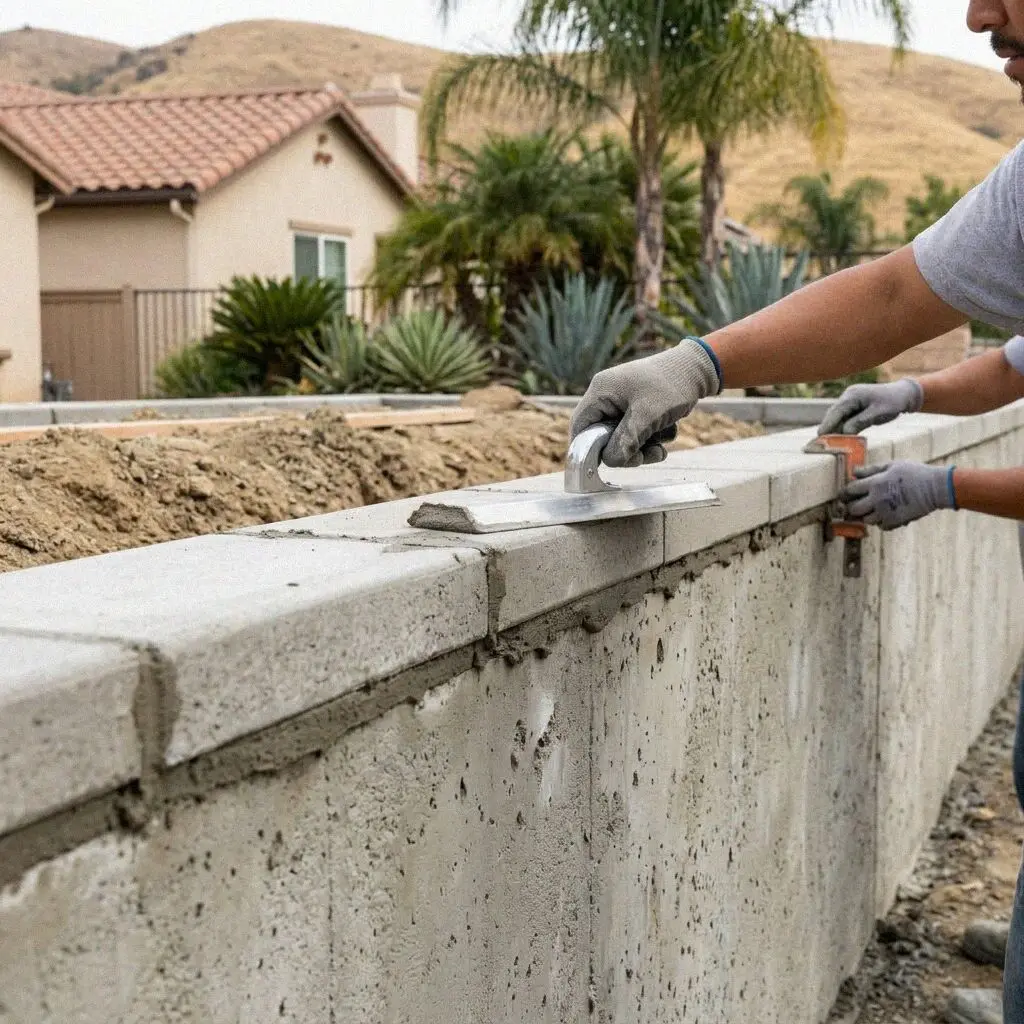
The crew pouring a concrete wall footing at a Jurupa Valley home

Ground and slope

The Two Things Jurupa Valley Asks of a Wall

Jurupa Valley has genuine slope and two different soils under it, and a wall here is usually carrying something a good deal heavier than a flower bed.

The Jurupa Hills and the Pedley Hills rise out of the middle of the city, so pads cut into them are held by walls rather than by grade. Weathered granite up those slopes takes a footing well and lets water through; a few streets down in the Belltown and Rubidoux flats the same trench finds Santa Ana River sand and rounded cobble, which gives a toe far less to push back against. The USDA Web Soil Survey sheet gives the first answer and the probe gives the last one.

The other half is the lot. Parcels here run to an acre and more, with horses, shops, trailers and workshops living on them, so a wall regularly holds the cut a driveway drops through or the platform a slab sits on. A load standing that close to the crest counts as a surcharge, which is the difference between a footing sized in the trench and a drawing an engineer has to stamp.

The five stages

How a Wall Job Runs in Jurupa Valley

Five stages from the measurement to the day you walk the finished run. One crew throughout, one written figure, and any drawing and permit filed by us before the trencher arrives.

1

Free measurement at the bank

Daniel Reyes takes the fall along the bank, measures how much height is held, and opens a hole at the footing line to see what it bears on.

2

Type, height and a date

You pick the wall. Past 4 feet with the footing counted in it is drawn, and a load above the crest goes to an engineer for a stamp.

3

Filed with Building and Safety

We lodge the drawing with the city and set the inspections against the calendar, so the counter is never an errand of yours.

4

Trench, steel and the pour

The footing goes down to bearing, steel is tied and signed off, then footing and stem are poured and left the full 7 days.

5

Drain, backfill, walk-through

Rock, fabric and pipe go in behind, fill is compacted in lifts, then you walk the run and take the written guarantee.

Before you decide

What Moves a Wall Estimate in Jurupa Valley?

Retained height moves it first, because height sets the footing width, the bar size and whether a drawing is needed at all. What the trench floor turns out to be moves it next. Every estimate is measured and written on site.

The height retained

Under 4 feet with the footing counted in, no drawing. Above it the footing widens, the bar steps up and the city sees the plan.

What parks above the crest

A trailer, an RV or a loaded truck parked nearer the edge than the wall is tall is weight the footing is sized for, not soil alone.

What the probe finds

Firm granite takes a footing as dug. River cobble and old fill come out and are replaced, and how deep that runs is measured on site.

The length of the run

Half-rural lots take long walls, and length adds footing, rock, pipe and backfill at an even rate rather than in steps.

No wall is estimated off a phone photo. The visit costs nothing, the figure is written standing at the bank, and a call comes back within 1 business day. (951) 555-0159 or send us a message.

Get your Jurupa Valley wall measured

Call or use the form, and a time is set for the same week. Daniel Reyes takes the levels along the bank, opens a hole at the footing line, and hands you the written figure before he drives away.

Request a Free Estimate

Written on site · No obligation

By submitting, you agree to our disclosure and consent terms, including being contacted by SkyVale Jurupa Valley Concrete.

From three lots here

Wall Jobs Around Jurupa Valley, in Their Words

Three reviews from Jurupa Valley lots, posted on Google, Facebook and the BBB. Each is about a wall rather than a slab: a shop pad, a driveway cut and a long run on horse property.

Google review

“The pad our shop sits on had started breaking away at the edge where the old tie wall was leaning into it. They pulled the ties, trenched past the loose stuff and poured a new wall with rock and a pipe behind it. The slab edge has not shifted since and the weeps ran all through February.”

Hector M. of PedleyShop pad retaining wall · Google · 2026
Facebook review

“Our drive drops about 5 feet off the street and the bank kept sliding into it every winter. The height meant a drawing and a permit, and Daniel did both and met the inspector twice, so I never went near the counter myself. The wall carries the drive and the face is dry.”

Venancio L. of RubidouxDriveway cut wall · Facebook · 2026
BBB review

“Eighty feet of bank behind our arena, and rather than one tall wall they benched it into two, which kept us clear of the engineering. Fill went back in layers with a plate over every one. Two winters of runoff off the hill and the top course still reads straight on a string.”

Cheryl D. of Glen AvonTiered wall on horse property · BBB · 2025

Asked before booking

Retaining Wall Questions From Jurupa Valley

The eight settled before a wall is booked here: where the permit line falls, how deep the footing goes, what is put in behind the stem, and what changes when a driveway sits above it.

(951) 555-0159
  • What moves the cost of a retaining wall here?

    Retained height moves it before length does, because height sets the footing width, the bar size and whether a drawing goes to the city at all. After that it is what stands above the crest, what the trench floor turns out to be, and how far a barrow has to travel on a large lot. Every estimate is measured and written on site, so nothing is worked out off a photograph.

  • Does a retaining wall in Jurupa Valley need a permit?

    Over 4 feet, yes. The 4 feet counts from the underside of the footing upward, not from the dirt you are standing on, so a wall that reads 3 feet off the patio can still need one. It is drawn and filed with the Building and Safety Department at the City of Jurupa Valley, and the city looks at the open trench and again at the tied steel. Below the line and unloaded, none is needed.

  • How long does a wall take to build on a lot here?

    Four to six days on site for a straight run, plus whatever the drawing and the permit take in front of it. A day to trench, a day for the steel and its sign-off, a morning for the stem, then the rock, the pipe and the fill. The concrete wants 7 days before it takes any load, and the fresh backfill is left unwatered while it beds down.

  • How deep does the footing go in this ground?

    Twenty-four inches is the starting depth, measured to ground that has not been dug or dumped before. Up on the granite slopes the trench often reaches firm bearing early and the full depth is dug anyway. Down in the river sand and cobble it goes further, because rounded stone gives a toe very little to push back against once the wall is loaded.

  • What goes in behind the wall that I never see?

    Clean rock standing the full height of the back face, a 4-inch perforated line at the bottom of it running on a fall to daylight, and fabric wrapped around the pair. The wrap is what most walls are missing: without it, granite fines wash into the rock and choke the line inside a few winters. Weeps set through the base at 4-foot spacing carry whatever the pipe cannot.

  • Can a wall hold up my driveway or an RV pad?

    Yes, and it is most of what we build here. A vehicle standing on the ground a wall holds up counts as a surcharge, so the base of the footing grows, the bar goes to a heavier size and the drawing is stamped for that weight. The driveway or the pad is measured on the same visit, because the two have to finish on one grade.

  • Is a new wall guaranteed, and what does that cover?

    Yes. a written workmanship guarantee against defects in how it was built comes with it, and its terms sit on the estimate you signed. What it stands behind is the depth we dug to, the steel, the drainage and the way the fill was compacted. What it cannot stand behind is a wall someone later builds on top of, or a drain outlet buried under new landscaping once we have left.

  • When is the wrong time of year to build one?

    A wet week. An open footing trench in decomposed granite holds its sides while it is dry and slumps once it is soaked, so through the rainy months the digging and the pour are fitted between storms. In July and August the stem goes in at first light, is kept damp, and the fill waits out the full 7 days.

Where the crew goes

Retaining Walls Around Jurupa Valley

The towns this crew hauls forms and rock out to, closest to the Limonite Avenue office first. A bank sitting past the last name on it is still worth a call.

Show All Areas We Serve

Book the visit for your Jurupa Valley wall

One visit, one written figure taken at the slope itself, and someone on the phone within 1 business day to fix a start date. You owe nothing either way, and the estimate is yours to set beside anyone else's.