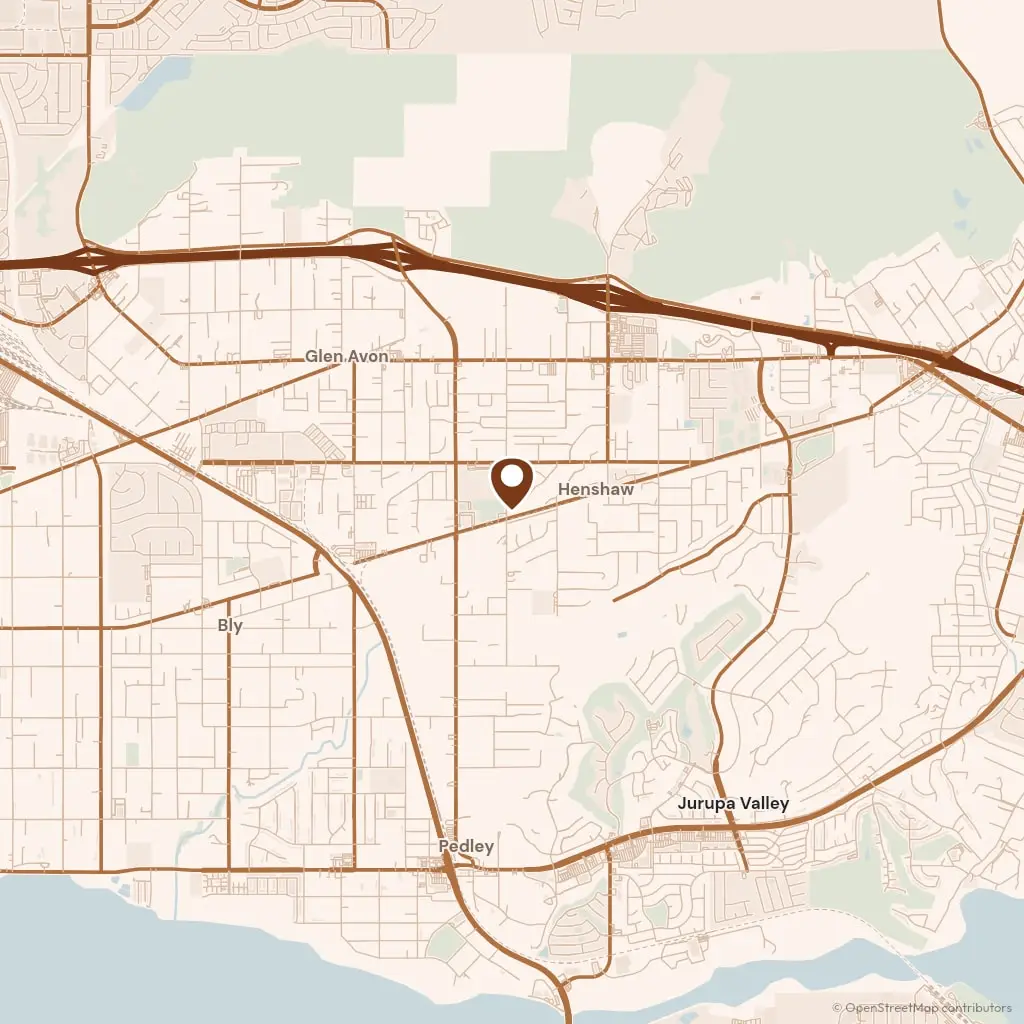
Our yard is on Limonite Avenue, 18 miles west, and the run east on the I-10 puts a crew in Redlands inside 40 minutes. Plans go to the City of Redlands rather than to a Riverside County counter, because this town is in San Bernardino County, and a designated historic property takes a certificate of appropriateness before anything the street can see is altered. We check the register at the estimate, not after the forms are set.
The mansion streets run south of downtown, Cajon Street and Olive Avenue among them, on deep lots where the garage sits at the back of a 150 foot side drive and a mixer cannot follow it. The quarter off Colton Avenue by the university is the same era on smaller frontages. North of the I-10 the flats are plainer and the access is easy. East toward Mentone and the Crafton Hills the tracts are newer, the pads were cut and filled, and a back yard can drop 4 feet across its width.
The land falls from the Crafton Hills west toward the Santa Ana River, and the Mill Creek Zanja runs on that line: the irrigation ditch dug in 1819 to carry Mill Creek water 12 miles west across what is now Redlands, culverted through the western half of town since the 1920s. Grade is therefore something a slab can use here, which is not true everywhere we work. We pour Redlands from October through May by preference, and start at 6 in the morning through the summer.